
A neighbor sells their house for the same price as yours, on the same street, and finds a buyer in three weeks. You, after two months, not a single offer. The difference rarely lies in the property itself: it lies in the accuracy of the initial estimate. Evaluating the value of your house before putting it on the market means cross-referencing reliable local data with the actual characteristics of the property.
EPC and energy label: a criterion that impacts the selling price
Even before comparing your house to others in the neighborhood, its energy performance diagnosis is checked. Since the reform of the EPC calculation method in 2026, some houses heated by electricity have seen their labels change. A letter better or worse on the EPC can significantly shift the perceived value by buyers.
The EPC is no longer just an administrative document. A poor energy label drives away buyers or triggers downward negotiations. With comparable surface area and location, two houses with different labels do not play in the same price category. Therefore, it is advisable to conduct this diagnosis early, before setting any price.
If the result is disappointing, it also allows for estimating the costs of energy improvement work and deciding whether it is better to invest before the sale or adjust the price accordingly. Buyers now factor in the cost of energy renovation into their budget, and a property rated F or G suffers a tangible depreciation. To delve deeper into the methods for setting a fair price, real estate estimation on Actu Immobilier details the approaches suited to each situation.
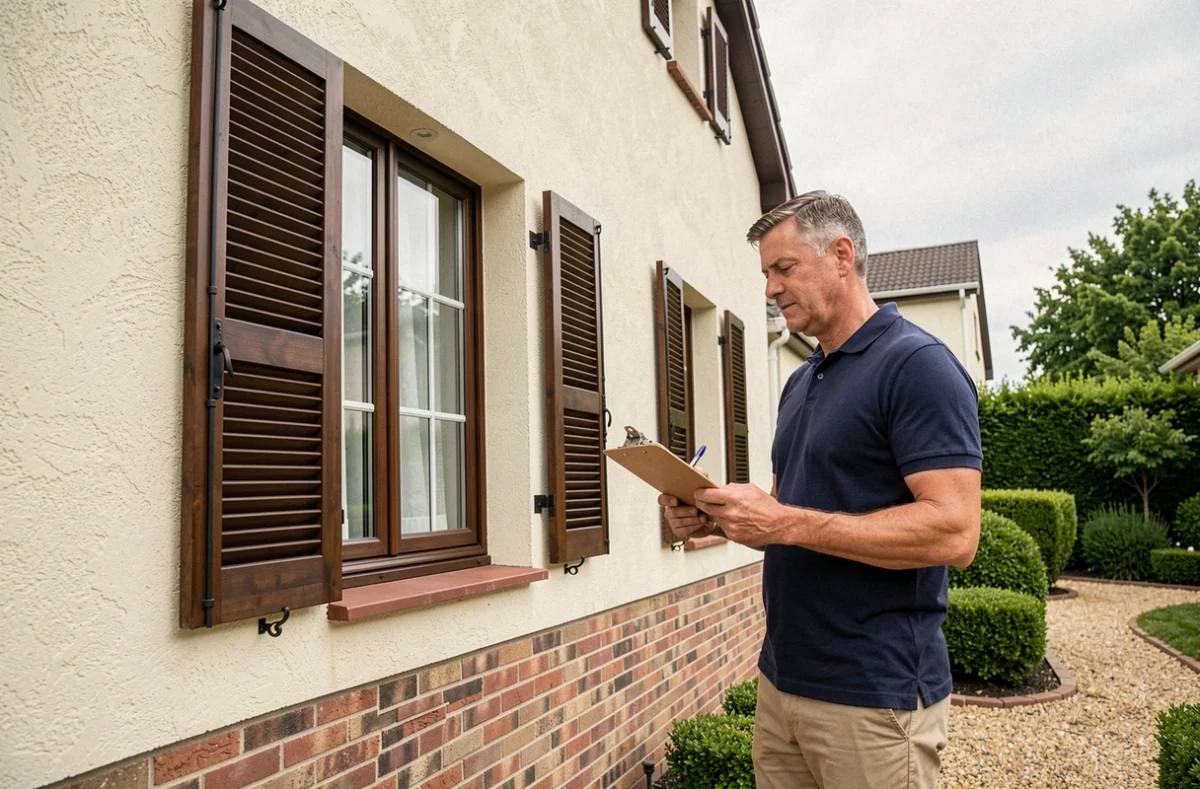
Compare houses sold in your municipality, not in your department
It is often said that you should look at the price per square meter in your area. The problem is that most sellers consult averages that are too broad. The report published by the Notaires du Grand Paris in October 2026 shows that the price evolution of old houses varied significantly from one Île-de-France department to another: slight decline in Seine-et-Marne, increase in Hauts-de-Seine. A regional average is not enough to estimate a house.
What matters is the actual transaction price of comparable houses in your municipality, ideally in your neighborhood. Two public tools allow access to this data:
- The DVF database (Demandes de Valeurs Foncières) lists the sales that have actually been concluded, with the price, surface area, and address. It includes transactions from recent years, municipality by municipality.
- The Patrim tool, accessible via the personal space on impots.gouv.fr, allows you to consult recent sales around a specific address, filtered by property type and surface area.
- Local notarial data, often updated quarterly, further refines the comparison by distinguishing between old, recent, and new houses.
We select sales of houses close in size, number of rooms, and general condition. Three to five recent transactions within a tight radius provide a much more reliable range than a departmental average price.
Premium and discount: what causes price variation between two similar houses
Two houses of the same size on the same street can sell for very different prices. The gap comes from criteria that databases do not always capture, and that must be evaluated either by oneself or with a professional.
What generates a premium
- A larger than average plot for the neighborhood, especially if it is buildable or offers potential for extension
- A recent renovation of the roof, plumbing, or heating system, with supporting invoices
- A south-facing orientation for living spaces and an unobstructed view without overlooking
- A garage, a private parking space, or a converted outbuilding
What causes a discount
Major renovation work needed significantly lowers the perceived value beyond its actual cost. A buyer who sees an aging roof or non-compliant electrical installation anticipates the worst, even if the quote would be reasonable. The condition of the facade, the presence of visible dampness, or non-compliant sanitation also weigh heavily in negotiations.
The proximity of a nuisance (busy road, relay antenna, high-voltage line) causes a discount that is difficult to compensate for, regardless of the interior condition of the property. It cannot be erased, but it can be integrated from the start into the displayed price to avoid weeks of stagnation.

Online estimation, self-evaluation, or professional: which method to choose to estimate your house
Online estimation tools cross-reference past transaction data with the declared characteristics of the property. They provide a rough estimate in a few minutes. Their limitation: they do not see the actual condition of the property, nor the work done, nor the atmosphere of the neighborhood. An online simulator provides a basis, not a selling price.
Self-evaluation using DVF or Patrim data takes more time but allows for a more refined comparison. You manually select the closest properties and adjust based on identified premiums and discounts. This method works well when you know your local market and have enough recent comparable transactions.
Estimation by a real estate agent or notary remains the most accurate method for atypical properties, houses with significant land, or areas where transactions are rare. The professional visits the property, knows the active buyers in the area, and can incorporate elements that algorithms overlook. Most agencies offer this estimation for free, with no obligation.
You can also combine the three approaches: start with an online tool, refine with public data, then validate with a professional. This cross-referencing reduces the risk of overestimation or undervaluation, the two most costly mistakes in time and money during a real estate sale.
The local market remains the final judge. The same notarial report from October 2026 reminded us that old houses in Île-de-France were declining more than apartments over a year, confirming that each segment has its own dynamics. Estimating your house means accepting that its price depends less on what it cost you than on what a buyer is willing to pay today, in that specific neighborhood.