
When choosing between an automatic scooter and a manual motorcycle, the decision depends less on personal preference than on measurable factors: daily distance, road type, licence held and annual running costs. This article compares these two types of two-wheelers based on the factors that matter most for commuting.
Motorcycle vs. scooter comparison for daily commutes
| Criterion | Scooter | Motorcycle |
|---|---|---|
| Transmission | Automatic (CVT) | Manual (clutch + gear shifter) |
| Riding position | Feet flat, upright torso | Straddling the bike, torso leaning forward depending on the type |
| Built-in storage | Under-seat storage, front leg shield | None (top box or panniers optional) |
| Comfort in town (stop-and-go) | High (no gear changes) | Moderate (frequent clutch use) |
| Stability at higher speeds | Good on maxi-scooters, limited on 50 cc models | Greater (wheelbase, wheel size) |
| Routine maintenance | Belt, rollers, oil change | Chain, sprockets, oil change, clutch |
| Roadworthiness test (category L) | Mandatory since April 2024 | Mandatory since April 2024 |
This table highlights a fundamental difference: a scooter reduces the mental effort required for urban riding thanks to its automatic transmission, while a motorcycle offers greater versatility as soon as a journey takes you beyond the city. The right choice depends directly on the roads you travel every day.
Riders looking to compare the options available can browse motorcycle and scooter listings on Car Only to check market prices before making a decision.
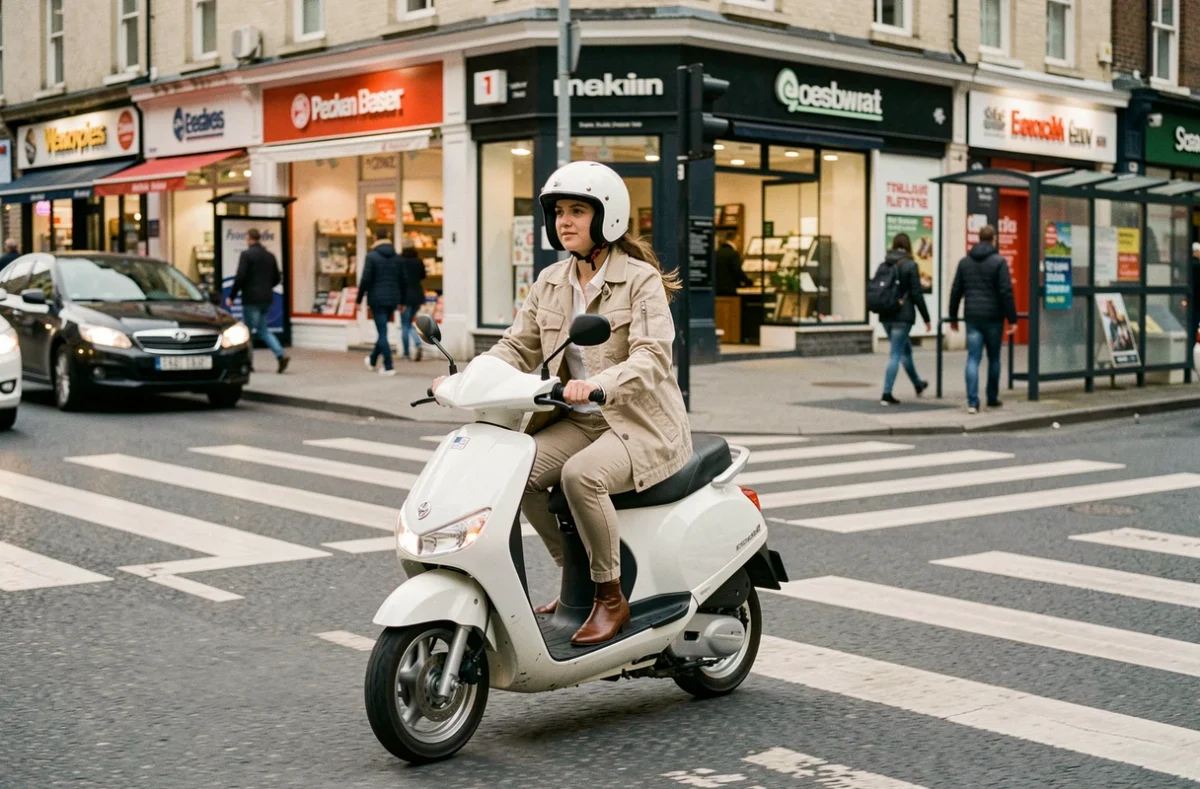
Distance and riding environment: choosing a scooter or motorcycle for your commute
A short urban commute with frequent traffic lights and speeds rarely exceeding 50 km/h clearly favours a scooter. Not having a clutch eliminates repetitive movements in traffic jams. The under-seat storage can hold a bag, a U-lock and sometimes an open-face helmet.
On a mixed route (through town, then onto a fast road or country road), the motorcycle has the edge. Its larger-diameter wheels, lower centre of gravity on naked bikes and manual gearbox allow for brisk acceleration and more stable handling above 80 km/h.
The maxi-scooter option
Maxi-scooters (typically 300 to 500 cc and above) blur the distinction. They retain automatic transmission and storage while offering stability on fast roads comparable to that of a touring motorcycle. A maxi-scooter combines urban comfort with long-distance capability, but its purchase price and insurance costs are closer to those of a motorcycle with an equivalent engine size.
Two-wheeler licences: which category covers which vehicle?
The type of licence you hold directly determines which models you can ride. Here are the main categories:
- The AM licence (available from age 14) allows you to ride mopeds under 50 cc, including both scooters and motorcycles, with a top speed of 45 km/h. It is suitable only for very short urban journeys.
- The A1 licence (available from age 16) covers 125 cc vehicles and three-wheeled scooters. Drivers who have held a category B licence for more than two years can also qualify after completing seven hours of training.
- The A2 licence (available from age 18) covers motorcycles and scooters up to 35 kW. After holding an A2 licence for two years and completing additional training, you can obtain an A licence, which has no power limit.
Regulations can therefore settle the choice between a motorcycle and a scooter: with a category B licence and 125 cc training, you can ride both types of vehicle up to 125 cc, but you will need a motorcycle licence to ride anything more powerful.
Annual running costs: maintenance, insurance and roadworthiness testing
A belt-driven scooter generally needs less frequent maintenance than a motorcycle chain, which requires regular lubrication and more frequent replacement. However, replacing a scooter’s belt and rollers can be a significant one-off expense.
Insurance costs vary considerably depending on engine size, power and rider profile. For vehicles with the same engine size (125 cc), the difference between a scooter and a motorcycle is modest. It widens in the higher categories, where sports motorcycles typically have significantly higher premiums than GT scooters.
Roadworthiness testing mandatory since 2024
Roadworthiness testing for category L two-wheelers came into effect on 15 April 2024. Vehicles first registered in 2020 or 2021 must undergo their first test in 2026, within four months of the registration anniversary and no later than 31 December. A pass remains valid for three years. This additional cost must be included in the annual budget, whatever type of two-wheeler you choose.
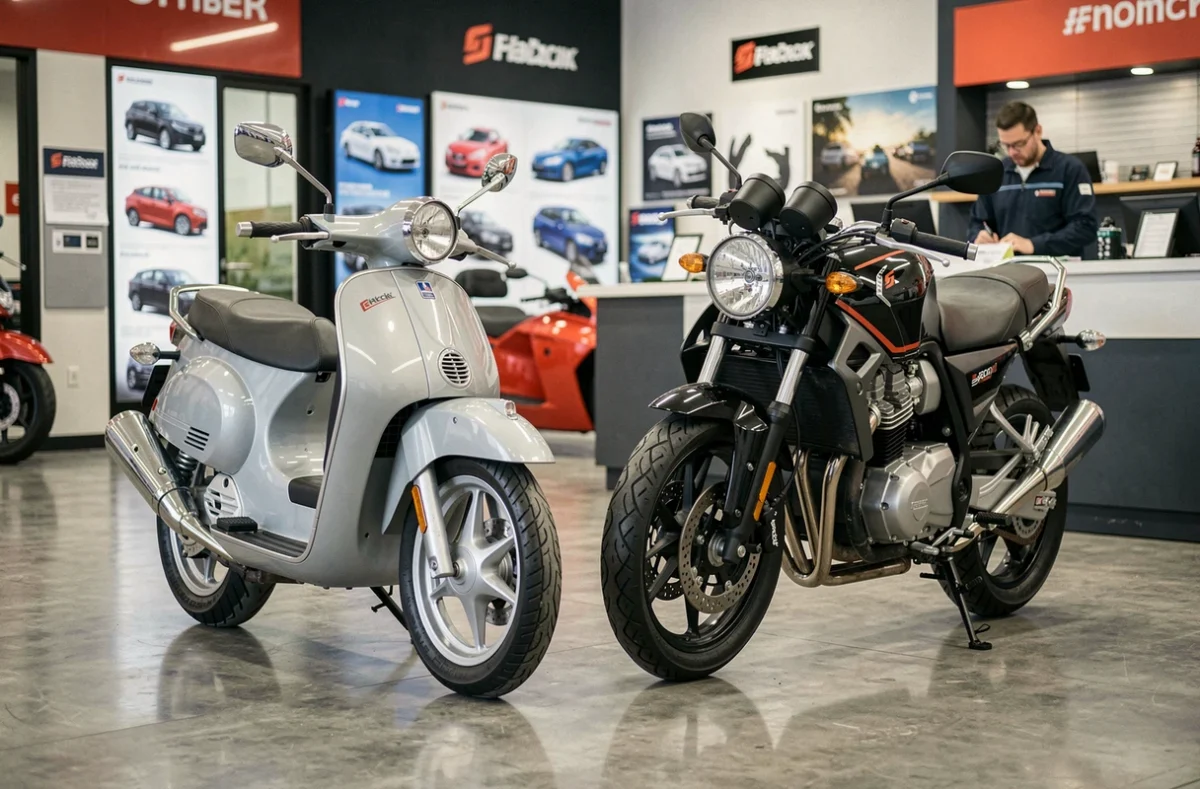
Crit’Air stickers and access to low-emission zones: an often-overlooked factor
Low-emission zones (LEZs) are becoming more common in French cities. Access depends on the vehicle’s Crit’Air sticker, not just its age or engine type. Restrictions vary from one local authority to another, including the area covered, days and hours of enforcement, and any exemptions.
If your daily commute passes through an LEZ, check that the model you are considering complies with the local rules in force. An older petrol scooter may be banned from a zone where a newer, better-rated motorcycle can circulate freely. Check Crit’Air eligibility before buying, especially when shopping for a used vehicle.
Choosing between a motorcycle and a scooter for everyday use comes down to three factors: the type of journey (urban or mixed), the licence you hold and the overall budget, including maintenance, insurance and roadworthiness testing. The comparison shows that scooters are best for short, congested routes, while motorcycles come into their own once the road opens up. The only mistake would be to buy before carefully assessing your typical commute.