What design trends are truly shaping interiors in 2026, and which are merely hype recycled from trade show to trade show? Between the palettes presented at Maison&Objet Pulse in September and the micro-trends shared on social media, sorting through them remains challenging. This article compares the design directions that are establishing themselves sustainably, their associated materials, and the positioning gaps between competing styles.
Materials and tactile finishes: what Maison&Objet Pulse confirmed
The September 2026 edition, renamed Maison&Objet Pulse, highlighted craftsmanship, tactile finishes, and expressive forms. The message is clear: texture now takes precedence over color as the primary differentiating factor of an interior.
Raw wood, natural stone, and textured fabrics (boucle, thick linen, felted wool) are making a comeback in furniture as well as wall coverings. These materials share a common trait: they visibly age, which contrasts with the smooth and uniform surfaces of the cold minimalism of previous years.
To explore furniture pieces and decorative objects aligned with these trends, you can visit Dofacto Design & Déco online and compare ranges by material.
Matte finishes and irregular surfaces also dominate ceramic and tile presentations. Hand-glazed stoneware, for example, introduces variations in shade from one piece to another, a deliberate flaw that stands out against the large tiles calibrated to the millimeter.
Comparative table of dominant design styles in 2026
Three major orientations are vying for attention this year. Their differences lie less in colors (often similar) than in their relationship to volume, furniture, and the accumulation of objects.
| Criterion | Warm Minimalism | Urban Maximalism | Scandic Bohemia |
|---|---|---|---|
| Palette | Earthy tones, beige, soft brown | Vivid colors, bold contrasts | Off-white, light wood, textile touches |
| Main materials | Linen, wood, natural stone | Velvet, lacquer, colored metal | Natural wood, rattan, wool |
| Object density | Low, each piece is chosen | High, deliberate accumulation | Moderate, balance between emptiness and presence |
| Key room | Living room, bedroom | Entryway, office, living room | Living room, open kitchen |
| Budget accessibility | Wide (suitable for second-hand) | Variable (expensive statement pieces) | Wide (common materials) |
Warm minimalism is replacing cold minimalism as the dominant reference in French-speaking design media. Le Journal de la Maison notes that this style is now found even in budget retailers, a sign of mass adoption.
Trendy colors for the living room and bedroom: beyond beige
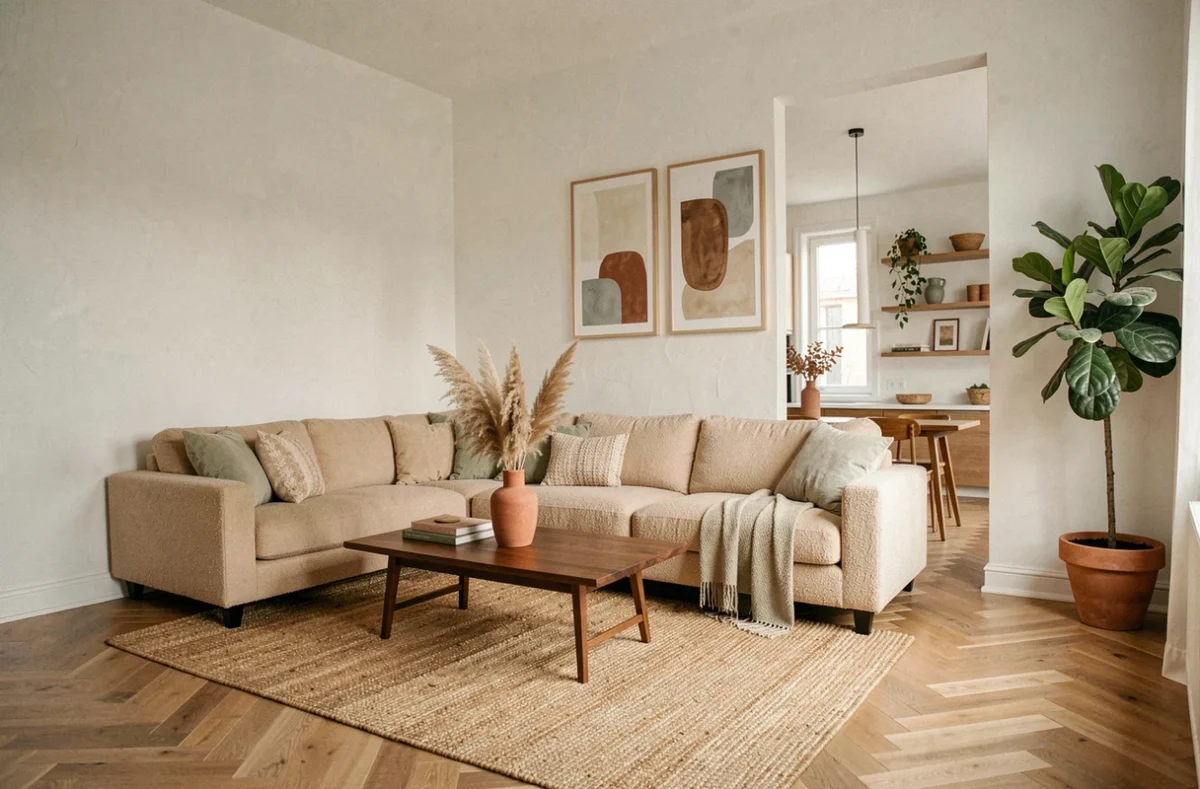
The earthy palette (terracotta, sand, warm brown) remains the most shared chromatic foundation among the three styles. It works well on an accent wall as well as on textile furniture.
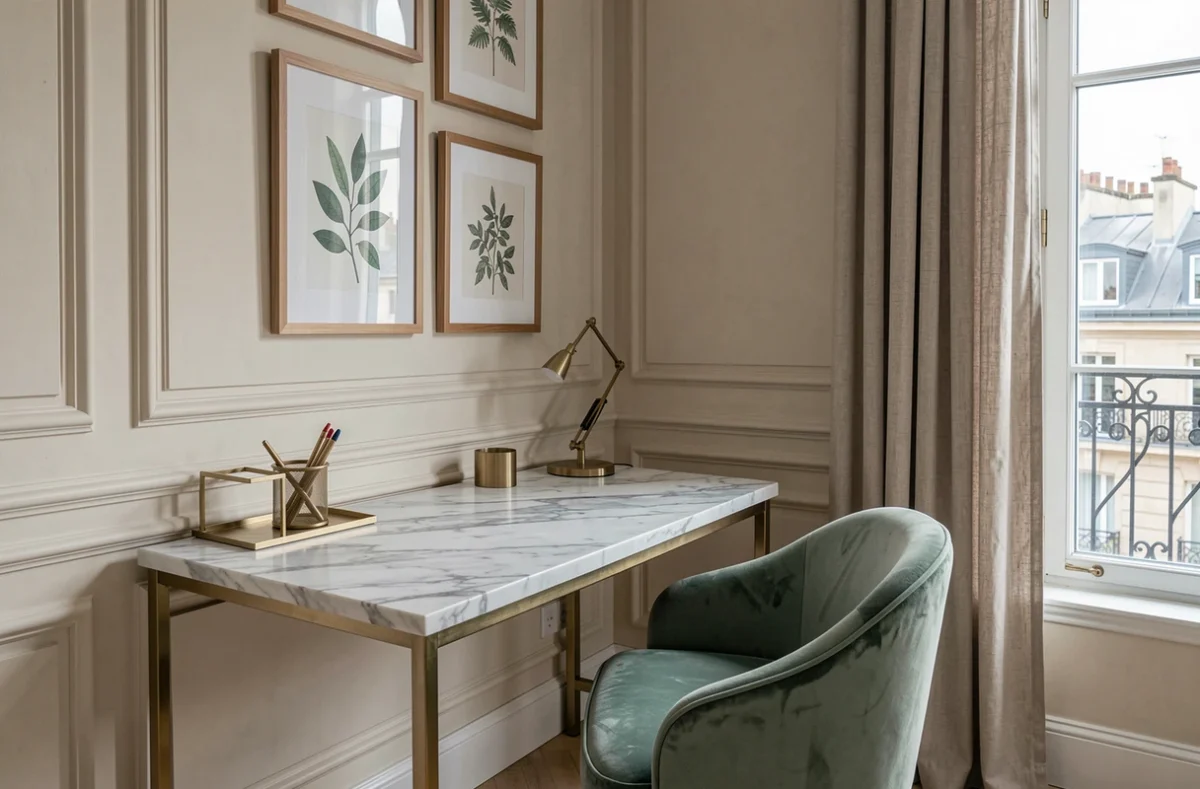
Urban maximalism diverges with saturated colors applied in blocks: an emerald green sofa, an orange light fixture, a burgundy rug. The effect relies on bold juxtaposition, not on gradients.
- For a living room: earthy tones on large surfaces (wall, sofa, rug) and a brighter color on a single element (cushion, lamp, artwork) create a focal point without overwhelming the space.
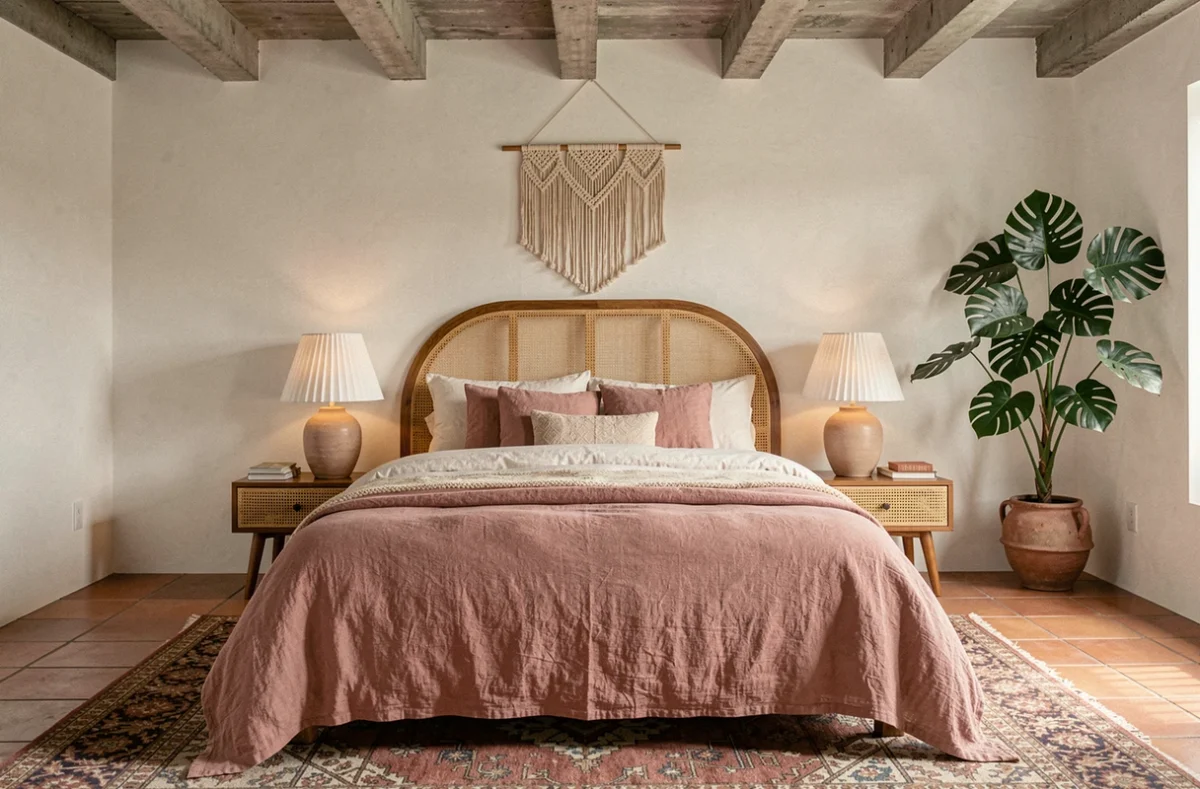
- For a bedroom: natural linen and muted shades (greige, taupe, sage green) promote a calming atmosphere, in line with warm minimalism.
- For an open kitchen: light wood combined with a stone or stoneware countertop provides continuity with the living area, typical of the Scandic Bohemia approach.
A significant gap separates the palettes presented at professional trade shows and those that work in a standard home. The high walls and controlled lighting of a booth enhance dark shades, which can overwhelm a room of less than fifteen square meters with a low ceiling.
Reuse and recovered materials: a design trend with concrete limits
Incorporating reused materials into interior decoration has become a recurring argument in design guides. The principle is appealing: giving a second life to wood, tiles, or antique furniture reduces the project’s footprint.
The operational reality is less fluid. According to Alto Studio, the lack of performance data on recovered materials complicates technical validation, especially for projects that go beyond simply adding a vintage piece. Diagnosis, careful removal, and traceability do not always suffice to ensure compliance with a layout.
For the decoration of an ordinary home, these constraints remain manageable: an antique piece of furniture or a batch of reclaimed cement tiles do not pose particular technical issues. The difficulty arises when reuse involves structural elements or significant surfaces in a renovation project.
Second-hand furniture and design: an expanding segment
The second-hand furniture market has been structured around specialized platforms and design-oriented consignment shops. A well-preserved 1970s armchair with its original fabric embodies both the maximalist trend and the reuse approach.
The decision often hinges on the condition of the upholstery. A sofa with a sound structure but worn fabric can be reupholstered in a contemporary material (boucle, corduroy), combining personalization and durability.
What the 2026 design trends really share
Despite their differences in density and palette, the three dominant orientations converge on one point: furniture and materials matter more than wall color. A natural linen sofa, a solid wood table, or a handmade ceramic light fixture define the atmosphere of a room more than a trendy wall paint.
This shift explains why warm minimalism and Scandic Bohemia coexist so easily in the same interior. Their base materials (wood, linen, stone) are identical. The difference lies in the quantity of exposed objects and the degree of chromatic contrast accepted.
The trends presented at Maison&Objet Pulse confirm this reading: expressive forms and craftsmanship take precedence over seasonal palettes. An interior built around sustainable materials and chosen pieces withstands fashion cycles better than a decor based on the color of the year.