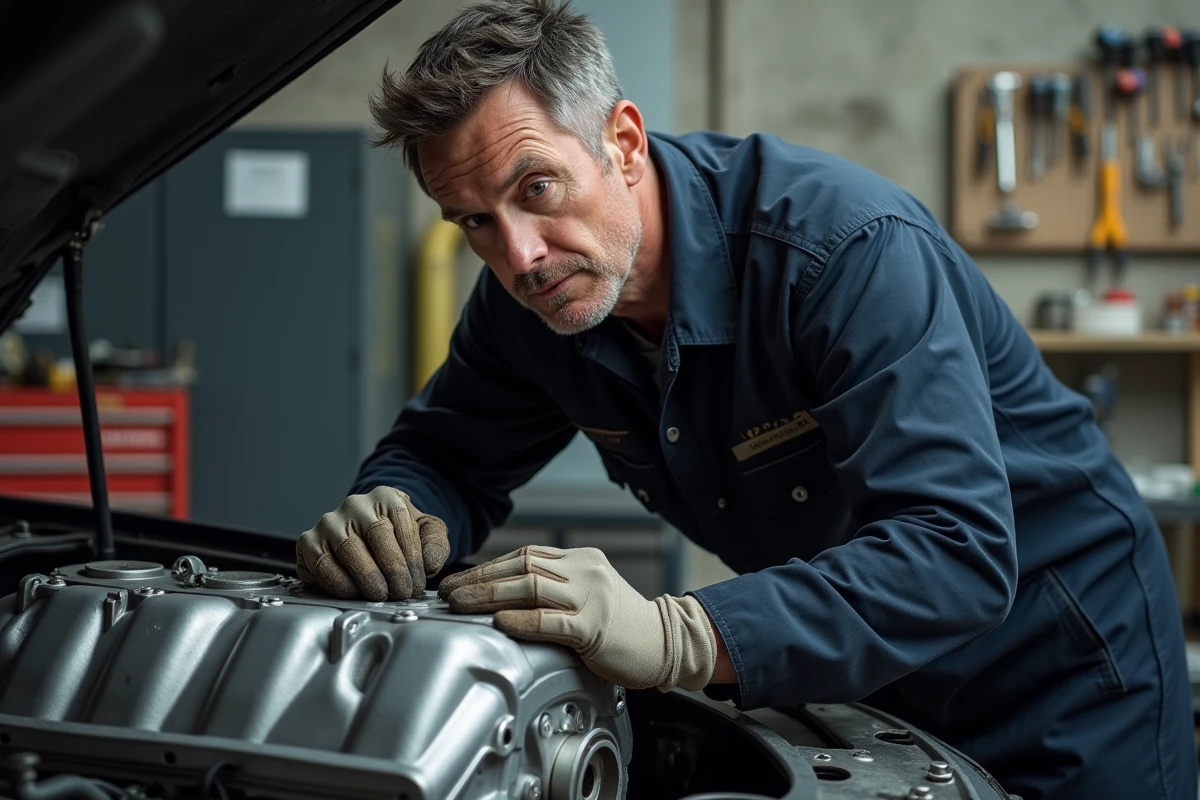
A forged engine refers to an assembly whose internal parts (pistons, connecting rods, crankshaft) are made by forging rather than casting. The difference goes beyond the manufacturing process: it alters the metallurgical structure of the components and, consequently, their behavior under thermal and mechanical stress. Measuring the actual gap between forged and cast parts helps to understand why this technical choice remains crucial for the performance and longevity of an engine.
Forged parts vs. cast parts: comparison of mechanical properties
Forging compresses a heated metal block under high pressure, aligning the grain fibers in the shape of the part. Casting, on the other hand, pours molten metal into a mold and allows the grain to form freely during cooling. This difference in internal structure produces measurable discrepancies across several parameters.
| Criterion | Cast part | Forged part |
|---|---|---|
| Metal grain density | Heterogeneous, possible porosities | Dense and homogeneous |
| Fatigue resistance | Moderate | Significantly higher |
| Thermal resistance | Acceptable in standard use | Stable at prolonged high temperatures |
| Weight at equal strength | Heavier (thicker walls) | Lighter (thinner walls) |
| Unit cost | Low | High |
| Cold noise (pistons) | Almost none | Possible knocking (dampened on recent alloys) |
The gap in fatigue resistance is the central point. A cast piston subjected to repeated cycles of compression and relaxation eventually develops micro-cracks from internal porosities. A forged piston maintains its structural integrity well beyond the stress thresholds of a cast piston, which explains its systematic adoption in competition.
To better understand the advantages of a forged engine in a real-world usage context, one must go beyond the simple property table and examine what these discrepancies concretely produce in a functioning engine.
Performance stability over time: the real gain of forging
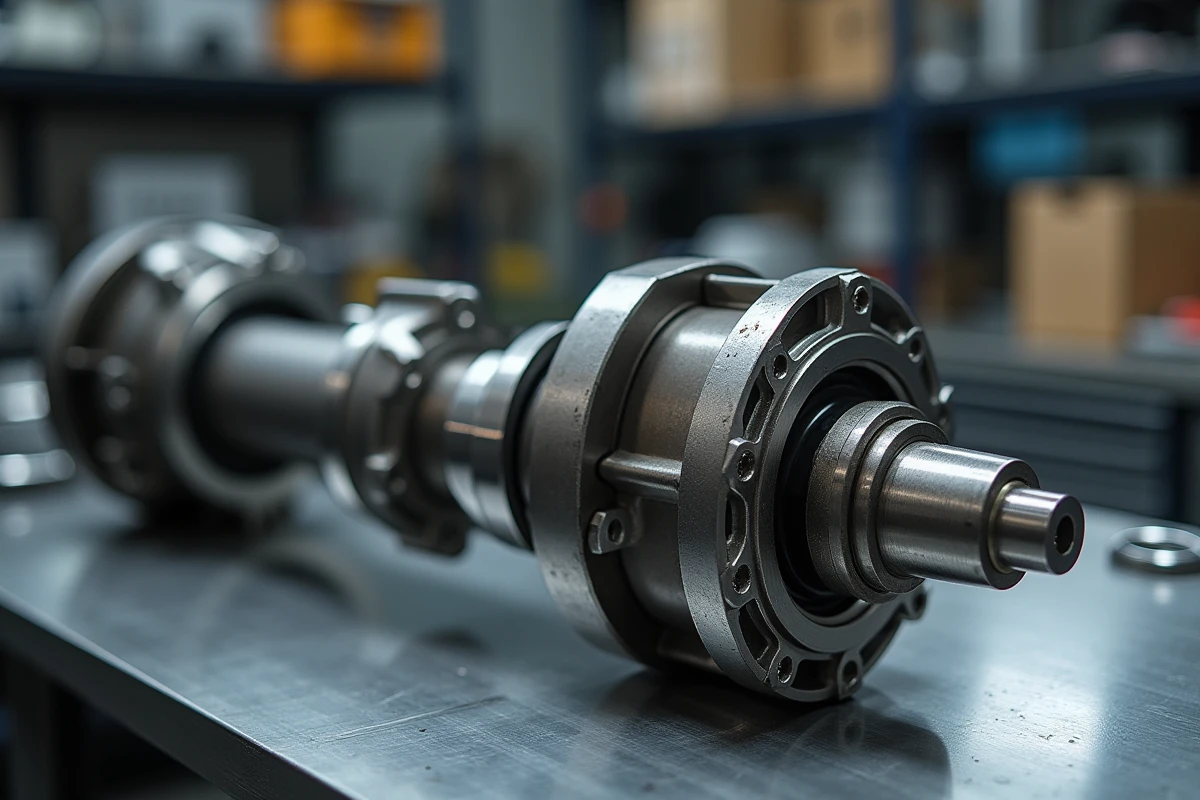
Most analyses focus on the raw strength of forged components. The less frequently addressed angle concerns the stability of performance over long usage cycles. In endurance and rally racing, private teams report that forged assemblies (pistons, connecting rods, crankshaft) maintain a constant compression ratio and regular oil consumption over extended stints.
With cast parts, even high-end ones, compression drift and oil consumption variation increase over hours of intensive operation. This drift results in a gradual loss of power and a less predictable engine behavior. In a 24-hour race or across multiple rally stages, the difference becomes tangible for both the driver and the engineer.
High RPMs and cutoff strategies
Since 2022, track-oriented tuners have been combining forged pistons with very lightweight titanium or H-beam connecting rods. The goal is not only to handle more power. This combination allows for higher RPMs and less conservative cutoff strategies: the cutoff can be raised, and occasional over-revving becomes tolerable without risk of breakage.
The gain thus lies in the engine’s operating range, not just in its maximum power. A forged engine that can rev higher without strain offers the driver a flexibility that cast components do not allow.
Recent forged alloys: the answer to cold knocking issues
The historical criticism of forged pistons concerns their behavior when cold. The larger operational clearance (necessary to compensate for the thermal expansion of the alloy) caused a characteristic knocking sound in the first minutes of operation. This noise, without mechanical consequences, made daily use unpleasant.
Next-generation alloys, particularly the 2618 type with low-friction skirt coatings, have significantly reduced this phenomenon. The coatings limit both noise and wear of the sleeves when cold, bringing the comfort of using a forged engine closer to that of an engine with cast pistons.
- Low-friction skirt coatings systematically applied to modern forged kits, reducing metal-to-metal contact at startup.
- Cold sleeve wear significantly decreased compared to previous generations of forged pistons.
- Knocking noise mitigated to the point of no longer being a hindrance to road use for most configurations.
Forged pistons, connecting rods, and crankshaft: hierarchy of components to replace
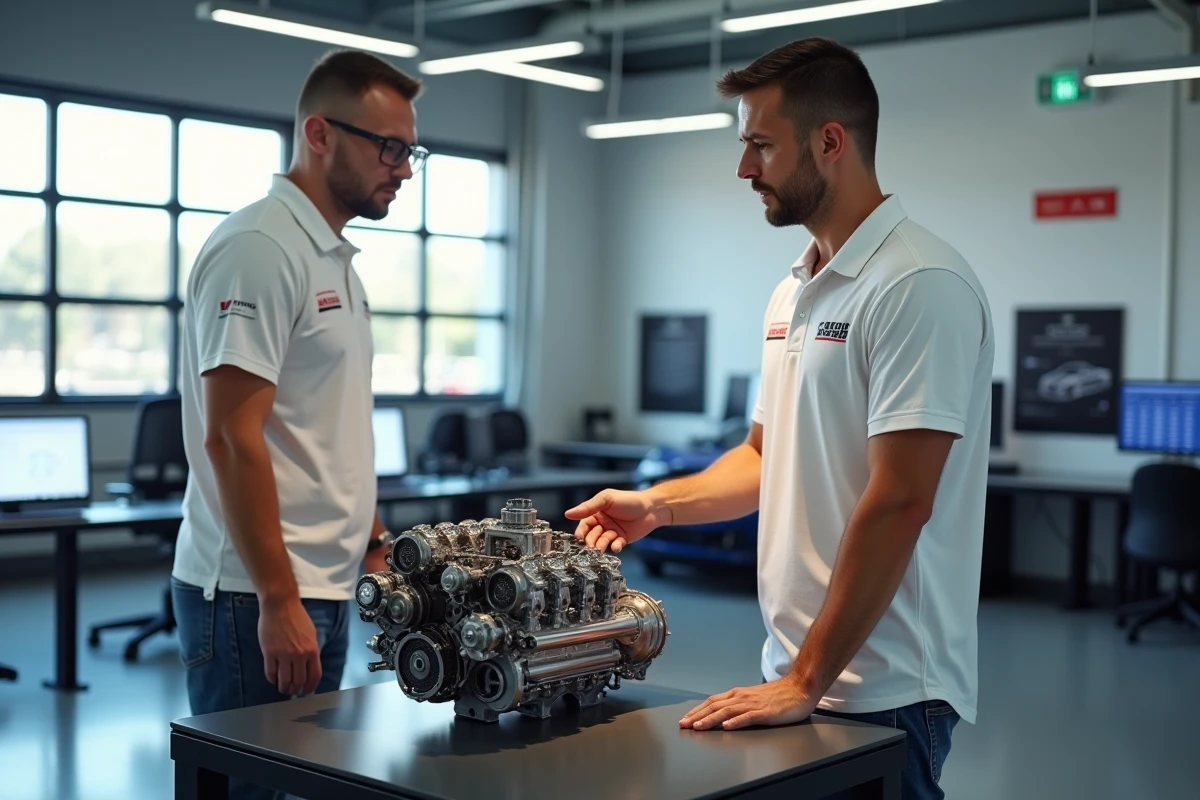
Forging an engine does not necessarily mean replacing all internal parts at once. The priority depends on the type of stress and the available budget.
Pistons are the first component to forge as they directly endure combustion pressure and heat from the gases. In a turbo engine pushed beyond its original mapping, cast pistons reach their limits before the connecting rods.
Connecting rods come second. They transmit the piston’s force to the crankshaft and endure considerable alternating forces at high RPMs. Forged connecting rods made of H-beam steel or titanium help to stabilize the rotating assembly without adding weight to the bottom end.
The forged crankshaft represents the last tier. Its replacement is costly and technically complex, but it ensures superior rigidity and balance in the most demanding configurations.
- Forged pistons: absolute priority for any turbo or atmospheric engine prepared beyond the original torque.
- Forged connecting rods: to be paired with pistons for configurations significantly exceeding stock power.
- Forged crankshaft: reserved for competition projects or builds aiming for very high power outputs.
The choice of a forged assembly is not just a matter of mechanical strength. The consistency of engine behavior over time, the ability to exploit wider RPM ranges, and the improvements in recent alloys make it an option whose benefits extend beyond the realm of competition. For a vehicle subjected to regular stresses beyond original parameters, forged components remain the most reliable technical foundation upon which to build a coherent engine preparation.