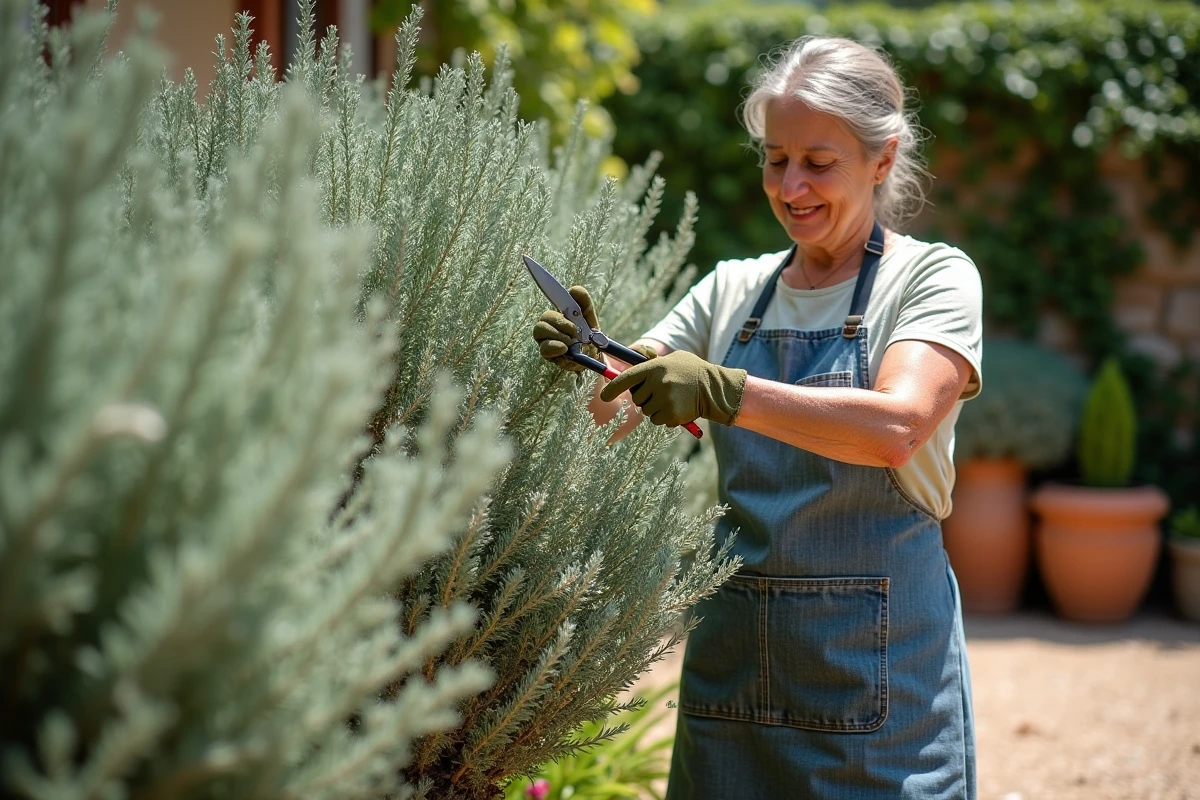
Bush sage flowers for several months, sometimes from the beginning of summer until the first frosts. This longevity directly depends on how the plant is pruned, and especially on the timing chosen for it. Field reports show that the classic pruning schedule is no longer suitable everywhere, particularly in regions affected by recurring spring droughts.
Pruning bush sage and drought: a schedule to adapt
The usual recommendation is to prune bush sages as early as January or February, before the resumption of growth. This advice remains valid in temperate oceanic climates, where spring rains accompany regrowth. However, in Mediterranean areas or regions that have experienced dry springs for several years, this schedule poses a problem.
The Mediterranean Nurserymen’s Association (APM), during the Professional Days in Hyères in November 2023, issued a technical note recommending to shift the main pruning to the end of winter rather than as early as January. The goal: to avoid triggering early regrowth that would be exposed to water stress even before summer. This recommendation specifically targets Salvia microphylla and S. x jamensis, the two most common groups in gardens.
To find out how to prune bush sage according to your climate, you must first observe your soil in spring: if it is already dry in March, postpone the intervention by a few weeks.
Summer refresh pruning: the technique that extends flowering
Most guides focus on late winter pruning. Few address a complementary action that makes a real difference in flowering duration: the summer refresh pruning.
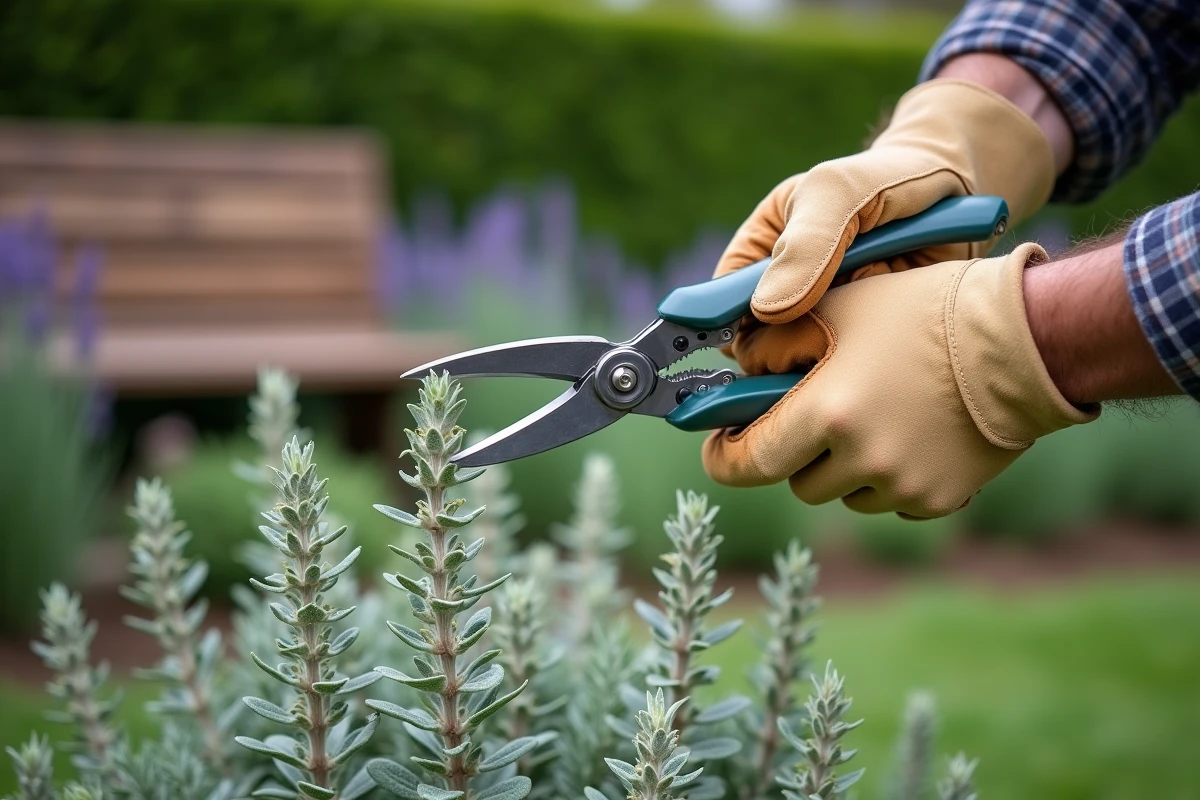
Comparative trials conducted between 2022 and 2024 by the Brittany Gardeners Association (published in their bulletin n°144, summer 2024) show that light pruning just after the first peak of flowering, at the end of June or early July, significantly boosts autumn flowering. The action is simple: remove the faded tips by ten to fifteen centimeters.
This intervention works under one condition: to water minimally after the cut, even on plants known to be drought-resistant. The plant mobilizes energy to produce new flowering shoots, and completely dry soil hinders this recovery.
What this pruning changes concretely
Without refresh pruning, bush sage often takes a flowering break in mid-summer, especially when temperatures exceed usual heat peaks. The faded stems remain in place, the plant invests in seed production, and autumn regrowth is delayed or remains weak.
With this light cut, the plant redirects its energy towards new floral buds. Field reports vary on the exact extent of the gain, but gardeners who practice this action report denser and earlier autumn flowering.
Flat pruning of sage: why this mistake breaks branches
Pruning a bush sage into a ball or flat shape (clean horizontal cut, same height everywhere) seems logical for achieving a uniform appearance. Observations made in public gardens in the Lyon metropolitan area show that flat pruning encourages branch breakage in the wind.
The reason is mechanical. A uniform cut produces a mass of regrowth concentrated at the same height. When the wind blows, this dense canopy offers significant resistance, and the oldest branches, having become rigid, break at the base. The result: gaps in the silhouette and wounds that heal poorly on lignified wood.
The irregular dome cut
The alternative is to prune following the natural shape of the bush, slightly higher in the center and lower on the sides. Varying the cutting length from branch to branch is also recommended. This irregular dome shape allows the wind to circulate through the vegetation instead of hitting a wall of foliage.
In practice, this means not using hedge trimmers on bush sage. Pruners remain the appropriate tool, branch by branch, respecting the following points:
- Cut above a leaf bud or visible bud, never on bare wood that will not regrow
- Prioritize removing dead branches or those crossing in the center of the bush to maintain good air circulation
- Shorten the previous year’s stems by one-third to one-half of their length, without going into the old lignified wood
- Keep the base of the bush more open than the top to avoid moisture accumulation conducive to fungal diseases
Bush sage and dead wood: the limit not to cross
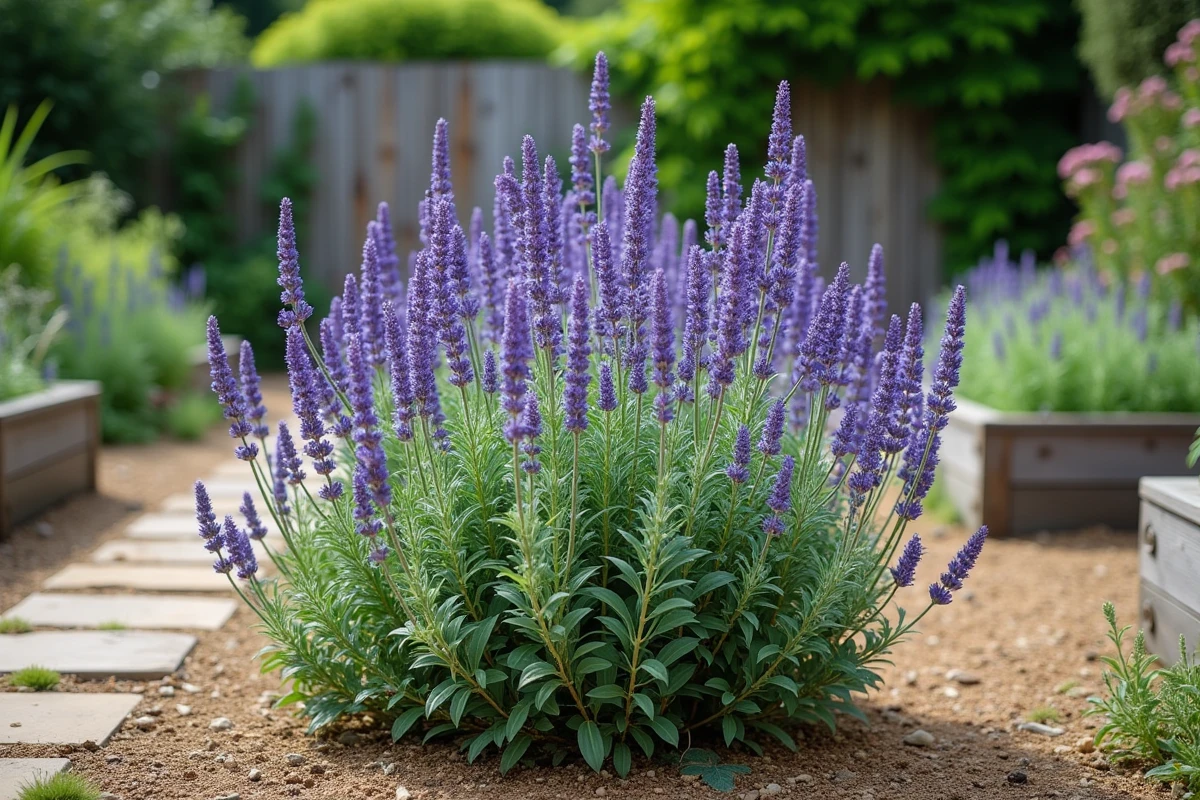
Bush sage has a peculiarity that many gardeners discover too late: old lignified wood no longer produces new shoots. If the pruning goes too low, into the brown and hard part of the stem, there will be no regrowth. The branch dies, and the gap in the bush does not fill.
This phenomenon explains why a neglected sage for two or three years becomes difficult to rejuvenate. The green wood, capable of budding, is concentrated in the upper third of the plant. The rest is dead or lignified wood that only serves to support the structure.
Regular annual pruning is therefore not a cosmetic gesture. It is the only way to maintain green wood throughout the entire branch structure and prolong the productive lifespan of the bush. A sage pruned every year remains compact and flowering for about ten years. A sage that is never pruned becomes bare from the bottom in three or four seasons and eventually requires replacement.
The best indicator remains the color of the stems at the time of cutting. Green under the bark means the branch is alive and will regrow. Dry brown means you need to cut above, higher, until you find living tissue.