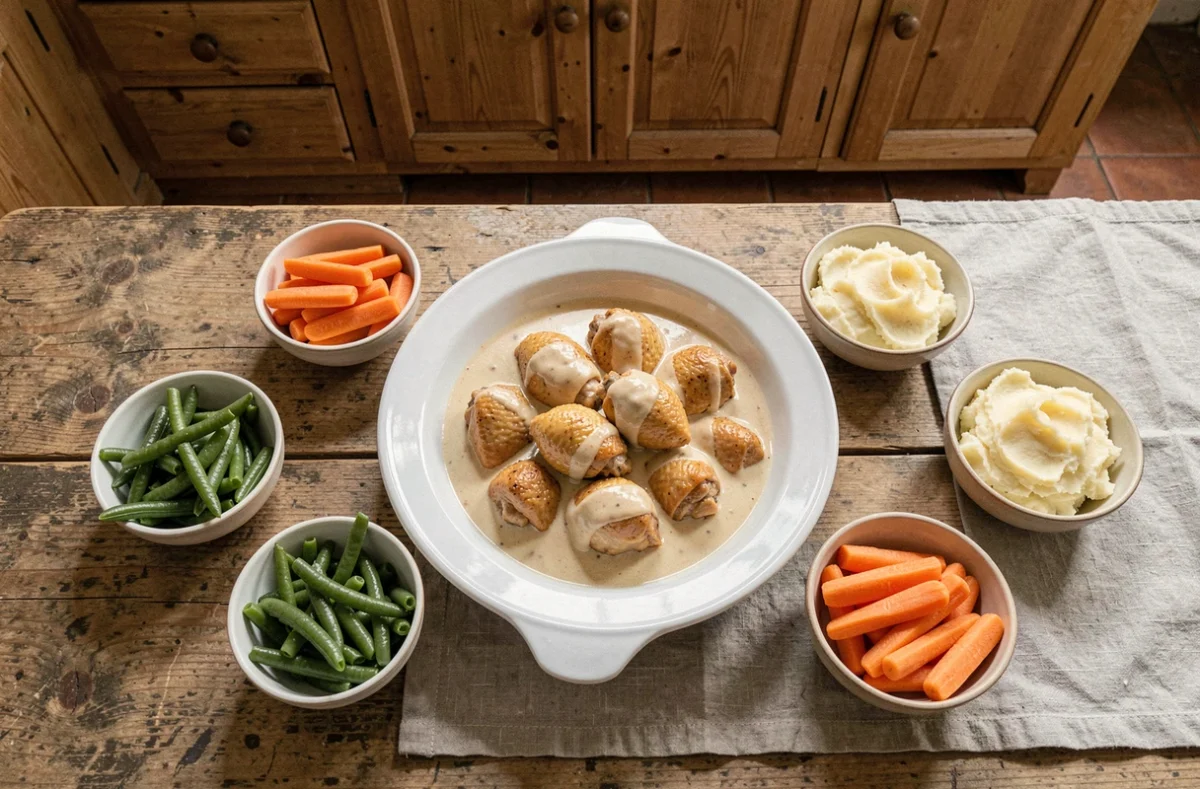
Creamy chicken already provides a generous amount of fat and protein. The side dish determines the overall balance of the meal: its texture, fibre content and how light you feel after the last bite. Rather than listing every possible vegetable, it’s better to understand what works with a rich sauce, and why.
Cream sauce and side dishes: the key to a balanced meal
A sauce made with crème fraîche coats the palate, leaving little room for side dishes that are too mild or rich. The side dish should provide a contrast in texture or acidity to keep every bite interesting.
A crunchy or slightly bitter vegetable (braised endive, al dente green beans) contrasts with the sauce’s creaminess. A neutral starch such as white rice soaks up the sauce without adding anything else, which can make the meal feel heavy. By contrast, a wholegrain starch or roasted vegetable adds a toasted note that brings the flavour back to life.
To choose vegetables and starches to serve with creamy chicken, first work out what’s missing from the plate: crunch, bitterness, colour or fibre.
Seasonal vegetables to serve with creamy chicken

The best vegetables to serve depend on the season. In autumn and winter, Interfel highlights leeks, squash, cabbage, carrots, parsnips and endives. These vegetables stand up well to longer cooking and develop flavours that hold their own against a creamy sauce.
Three cooking methods work particularly well with this dish:
- Oven-roasted vegetables (carrots, parsnips, butternut squash) caramelise on the outside, adding a sweet, toasted note that contrasts with the tender chicken.
- Braised vegetables (endives, leeks) soften slowly and absorb some of the sauce without diluting it, extending the flavour on the palate.
- Vegetables quickly sautéed over high heat (mushrooms, courgettes in summer) retain their crunch and create a clear textural contrast with the creamy sauce.
Mushrooms deserve a special mention. Slice and dry-fry them before adding them to the dish: they release earthy aromas that pair naturally with cream and mustard, two classic ingredients in this dish.
A seasonal roasted or braised vegetable is an excellent substitute for a large portion of starch if you want to lighten the plate. Serve a generous portion of vegetables and a smaller portion of starch if the sauce is particularly rich.
Wholegrain or classic starches: what changes on the plate
The most common choice is to serve white rice or steamed potatoes. These starches work, but add neither extra fibre nor much flavour of their own. Santé publique France recommends including at least one wholegrain starch a day, and creamy chicken is a good opportunity to do so.
Brown rice and wholewheat pasta have a more pronounced flavour than their refined counterparts. Their subtle nutty taste balances the richness of the sauce rather than simply soaking it up. Wholewheat couscous, less common in this context, also works well, adding a grainy texture that contrasts with the usual softness.
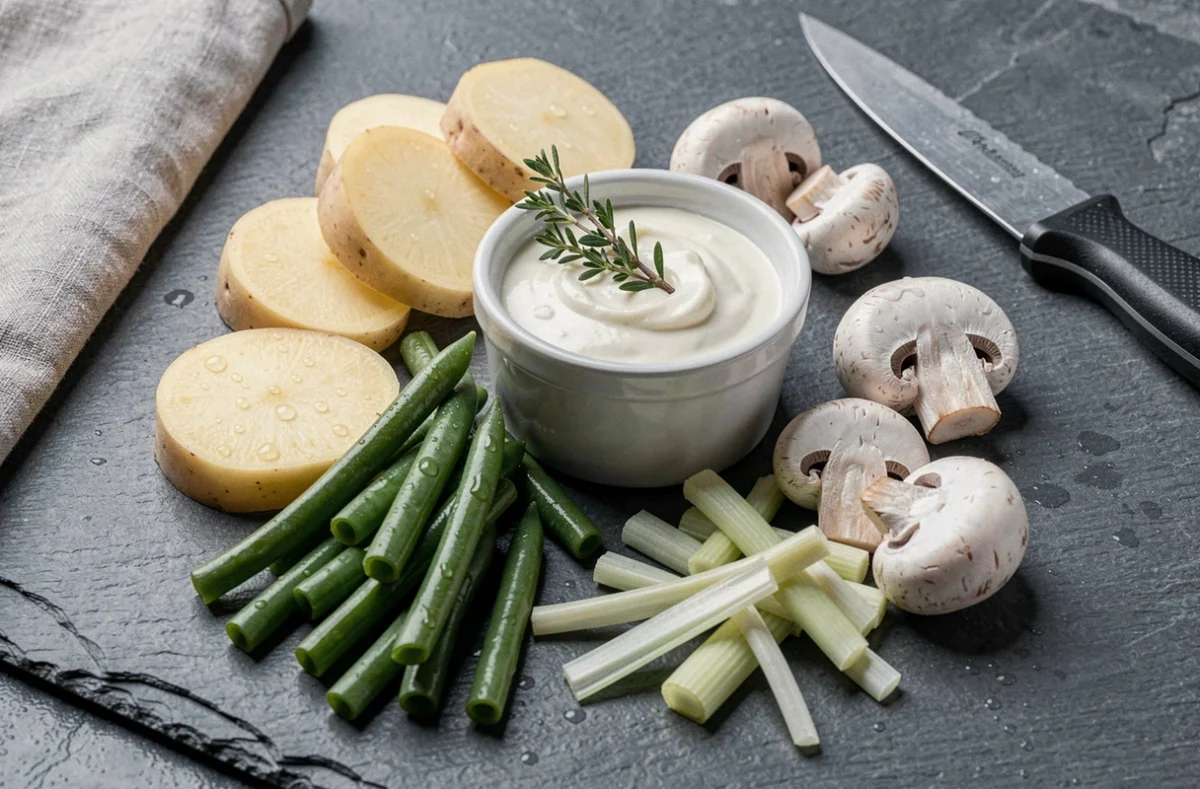
Potatoes still have their place, but the cooking method matters. Potatoes roughly mashed with a fork, a drizzle of olive oil and parsley are lighter than mash enriched with butter, which would double the fat content of an already creamy dish.
Portions: adjust the starch to the sauce
With a light sauce (reduced-fat cream, stock), a standard portion of starch is fine. With a thick, rich sauce, reducing the starch portion by a third and adding more vegetables helps keep the meal satisfying without overdoing it.
Pulses to serve with creamy chicken
Lentils, chickpeas and beans may not be the first things that come to mind as sides for creamy chicken. Yet they provide fibre and plant-based protein, changing the nutritional balance of the meal. Santé publique France recommends eating them at least twice a week.
Green lentils and split peas don’t need soaking, making them easy to prepare on a weeknight. Tinned or jarred precooked versions can be added in just a few minutes.
In practice, a warm green lentil salad dressed with cider vinegar works well alongside creamy chicken. The vinegar’s acidity cuts through the richness of the sauce, while the lentils’ firm texture provides a contrast that white rice can’t.
Oven-roasted chickpeas with cumin offer a crunchier option. They serve much the same purpose as roasted vegetables, but provide more fibre.
Three tried-and-tested plate combinations
Putting a plate together means combining texture, flavour and colour. Here are three specific pairings:
- Creamy chicken with mushrooms, brown rice and braised leeks. The rice soaks up the sauce, while the leeks add softness and a hint of sweetness.
- Creamy mustard chicken, warm green lentils with cider vinegar and honey-roasted carrots. The lentils’ acidity and the carrots’ sweetness balance the punch of the mustard.
- Classic creamy chicken, potatoes roughly mashed with olive oil and braised endives. The endives’ bitterness refreshes the palate between bites of sauce.
What these three plates have in common is that each element plays a distinct role. None is there simply to bulk out the meal.
The seasonal calendar is a useful guide when choosing vegetables, but it doesn’t guarantee that they’re locally grown. Checking the origin at the market stall or on the label is the only way to make sure the parsnips or leeks really come from the region. A seasonal, locally sourced side, paired with a wholegrain starch or a portion of pulses, makes for a creamy chicken meal that’s both satisfying and well balanced.