Replacing ricotta in a lactose-free recipe raises a question that is rarely asked: which substitute should you choose when you also need to account for a soy or tree nut allergy?
The label “lactose-free” on a cheese does not guarantee that it is free of milk proteins, and cashew cream is unsuitable for people with tree nut allergies. Choosing a substitute therefore depends as much on the allergen profile as on the texture you want in the recipe.
Ricotta substitutes and allergens: a profile-by-profile comparison
Milk, soy and tree nuts are among the allergens that must be declared on European food labels. A plant-based option is not automatically suitable for everyone avoiding dairy products. Here is a comparison of the main ingredients used to replace ricotta, based on the allergens they contain.
| Substitute base | Contains milk | Contains soy | Contains tree nuts | Resulting texture |
|---|---|---|---|---|
| Dairy ricotta “lactose-free” (with added lactase) | Yes | No | No | Identical to regular ricotta |
| Silken tofu | No | Yes | No | Creamy, slightly runny |
| Crumble firm tofu | No | Yes | No | Grainy, similar to ricotta |
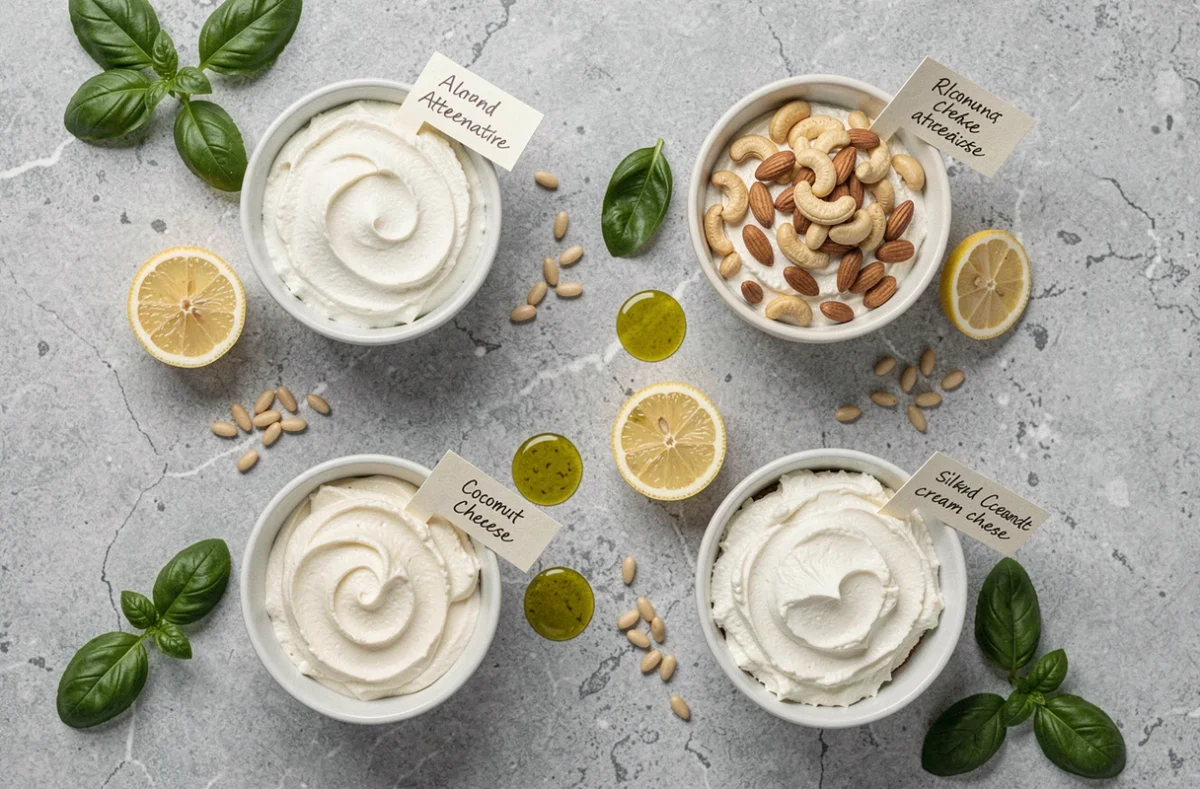
| Cashew cream | No | No | Yes | Rich and creamy |
| Thick coconut cream | No | No | No | Rich, slightly sweet |
Thick coconut cream is the only base free from all three major allergens (milk, soy and tree nuts). It works for the most restrictive dietary needs, provided you are happy with a slight sweetness that needs to be balanced with seasoning.
To identify the best lactose-free alternatives to ricotta for your needs, checking the ingredient list should always come first—well before relying on marketing claims on the packaging.
“Lactose-free” ricotta and milk allergy: a common misconception
Cheese made from dairy with added lactase is still a dairy product. It still contains casein and whey proteins. People with lactose intolerance can eat it, but those with a cow’s milk protein allergy must avoid it.
This distinction has direct implications in the kitchen. If you are preparing a shared meal and one guest has a milk allergy, store-bought “lactose-free” ricotta is not suitable. You will need to use a fully plant-based alternative instead.
European regulations add another layer of complexity to the terminology. Since the EU Court of Justice ruling in the TofuTown case on 14 June 2017, a purely plant-based product cannot be sold under the name “cheese”, even with the qualifier “plant-based.”
Brands therefore use terms such as “plant-based cheese alternative” or “cashew-based preparation.” Look beyond the product name to find out what is actually going into your filling.
Plant-based ricotta filling: how to avoid watery lasagna
The most common complaint about plant-based substitutes is that they turn out watery, especially in baked dishes such as lasagna or cannelloni. The texture depends as much on the substitute you choose as on how you manage the water released by the other filling ingredients.
Crumble firm tofu: the closest texture
Crumble firm tofu with a fork to recreate ricotta’s grainy texture. It absorbs seasoning well (salt, pepper, nutritional yeast, basil). Its moisture content is moderate, which helps reduce the risk of a soggy filling.
The downside: it contains soy, so it is unsuitable for people with a soy allergy.
Cashew cream: creamy but high in fat
After soaking and blending, cashews make a thick cream that is easy to season. The texture is closer to smooth ricotta than grainy ricotta. The result is creamy as long as you don’t add too much water when blending: it is best to add it a little at a time.
Allergen to watch for: tree nuts, which are on the list of allergens that must be declared in Europe.
Managing moisture in the filling
The substitute is only part of the equation. Mushrooms, spinach and zucchini release a significant amount of water as they cook. In a plant-based lasagna, cooking the liquid out of the vegetables before assembling the dish reduces the risk of a watery filling far more effectively than choosing a different substitute alone.
- Sauté sliced mushrooms over high heat until all the released liquid has evaporated before adding them to the filling
- Place cooked spinach in a clean tea towel and squeeze firmly to remove as much liquid as possible
- Salt the zucchini slices and leave them to drain on paper towels for about 20 minutes before cooking
Nutritional impact of replacing dairy ricotta
Changing the base alters the recipe’s nutritional profile. A UK modeling study reported by La Dépêche notes lower intakes of iodine, calcium, riboflavin and vitamin B12 when dairy products are replaced with unfortified plant-based alternatives. This finding applies to the overall diet, not to a single serving of filling, but it is worth considering if you make this swap several times a week.
Tofu provides complete plant-based protein. Cashew cream supplies magnesium and monounsaturated fatty acids. Coconut cream is lower in protein but free from the three main allergens. No substitute exactly replicates the nutritional profile of dairy ricotta, so it is worth varying the bases you use from one recipe to another rather than relying on just one option.
- For calcium: choose tofu set with calcium sulfate, which naturally contains more calcium
- For vitamin B12: check whether your chosen plant-based alternative is fortified; if not, make sure to get enough from other foods
- For protein: firm tofu is the highest-protein option among common substitutes
Choosing a ricotta substitute comes down to three factors at once: the consumer’s allergen profile, the texture you want in the recipe and how you manage moisture during cooking. No single product ticks every box, which is precisely why it is worth learning to work with several bases rather than searching for one universal replacement.