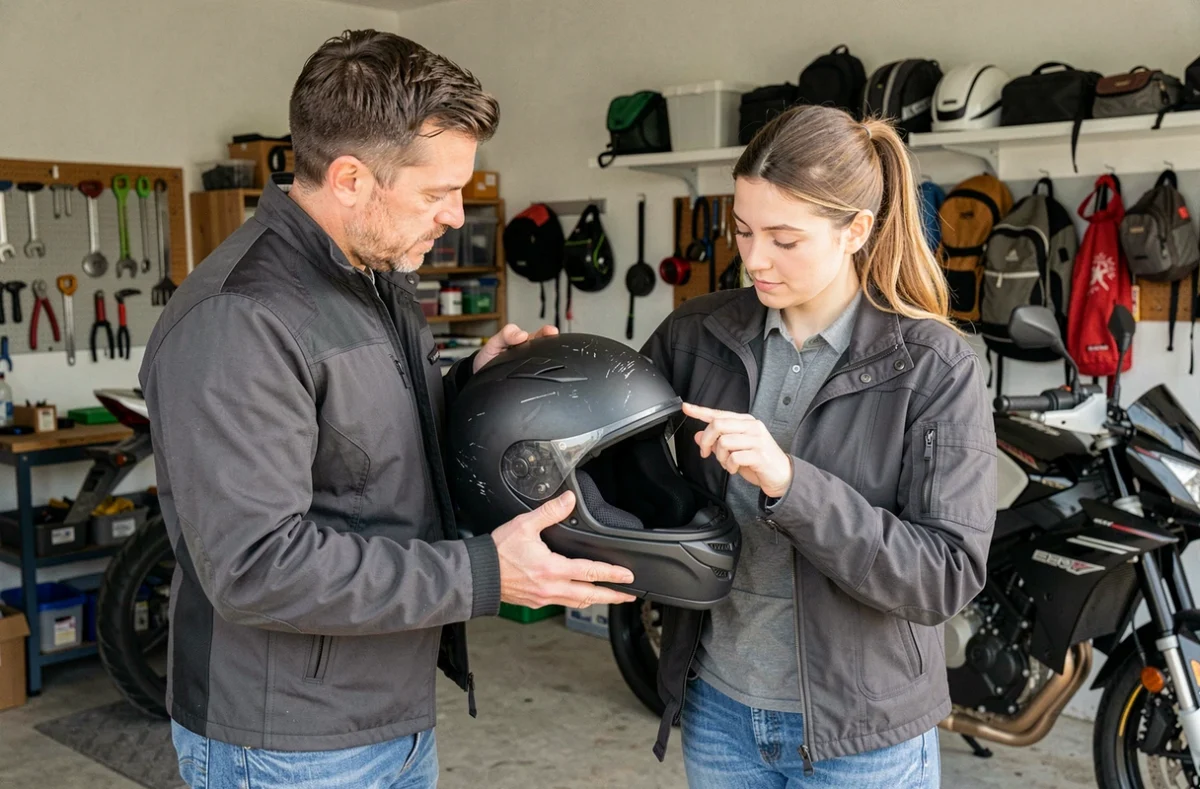
A friend asks to borrow a helmet to ride on the back of your motorcycle. The journey will take twenty minutes, the helmet seems to fit, and you figure it’ll be fine. In most cases, this scenario doesn’t pose a major problem. But if lending the helmet becomes a regular occurrence, or the borrower’s head shape doesn’t match the helmet’s inner shell, the protection it offers can change dramatically.
Motorcycle helmet fit: why size alone isn’t enough
We often think in terms of head circumference: a size 58 is a size 58, no matter who wears it. In reality, two people with the same head circumference can have very different head shapes—one more oval, the other rounder. Manufacturers design their helmet liners to fit a specific shape, and a helmet that shifts by just a few millimeters offers less protection in the event of an impact.
When you put on your own helmet, the EPS foam (expanded polystyrene) and cheek pads gradually compress to fit your head. This break-in period takes several weeks of use. Lending the helmet to someone whose head is wider at the back or narrower at the temples means giving them gear that hasn’t been molded to fit them.
The problem isn’t just comfort. A helmet that sits slightly loose on the head can rotate on impact, exposing the chin or the back of the neck.
Conversely, a helmet that’s too tight around the cheeks can restrict peripheral vision and tire the wearer, creating a risk on journeys lasting more than a few minutes. Whether you should lend a motorcycle helmet therefore depends first and foremost on how well the helmet’s shape matches the person wearing it.
One-off or repeated lending: two different situations
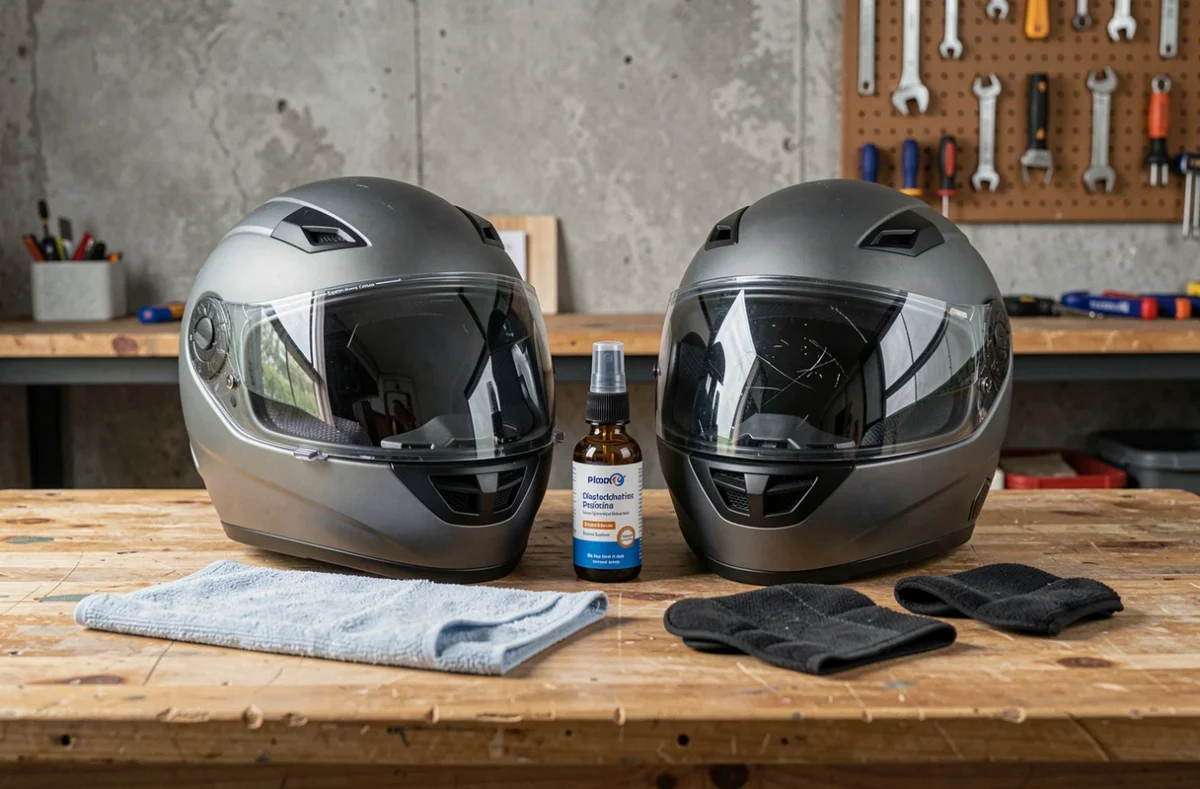
Lending a helmet once to someone whose head is a good match is a reasonable practice. Check that the helmet doesn’t rotate freely when they shake their head, make sure the chin strap fastens properly, and you’re ready to ride.
Lending the same helmet repeatedly to different people is a different matter. Each wearer slightly compresses the inner padding in a different way. After a few loans, the padding no longer fits anyone’s head properly, including the owner’s. The helmet wears out faster than it should, and its ability to absorb impacts decreases.
Motorcycle helmet hygiene: what happens inside
Sweat, sebum and skin cells build up in the inner padding over time. With your own helmet, you may not mind because it’s your own bacterial flora. When you lend a helmet, you also share this microbiological environment.
The specific risks include:
- Transmission of scalp fungal infections, particularly ringworm, which spreads easily in a warm, damp environment like the inside of a helmet
- Skin irritation caused by contact with residue from hair products (gel, hairspray, oil) that may not suit the borrower’s skin
- Lingering odors absorbed into the padding that washing may not completely remove
If you do lend your helmet, removing and washing the inner padding between users greatly reduces these risks. Most mid-range and high-end helmets have removable padding that can be hand-washed in lukewarm water with mild soap.
Balaclava or hair cap: a simple barrier
The most practical option is to wear a thin balaclava made from technical fabric. It creates a barrier between the borrower’s scalp and the helmet padding. Microfiber versions cost just a few euros and fit easily in a pocket.
This precaution doesn’t solve the fit issue, but it reliably addresses the hygiene concern.
Safety and ECE standards: what a borrowed helmet must meet
In France, any helmet worn on the road must be approved and carry a compliance marking. The current standard for motorcyclists is ECE 22-06, which has gradually replaced the older ECE 22-05 standard. A borrowed helmet must therefore meet the same regulatory requirements as a personal helmet.
Before lending a helmet, check three things:
- The approval label inside is still legible (a label sewn onto the chin strap or attached inside the shell)
- The outer shell has no visible cracks or significant impact marks, however minor, since a previous impact may have compromised the internal structure without leaving obvious external signs
- The chin strap works properly: the buckle (micrometric or double-D) fastens securely and tightens without any slack
A helmet dropped from a significant height onto a hard surface should be considered potentially compromised, even if there’s no visible damage. The EPS foam can crack inside without any visible deformation of the shell. A helmet that has been in an accident or suffered a heavy fall should not be lent out.
Alternatives to lending a helmet to a motorcycle passenger
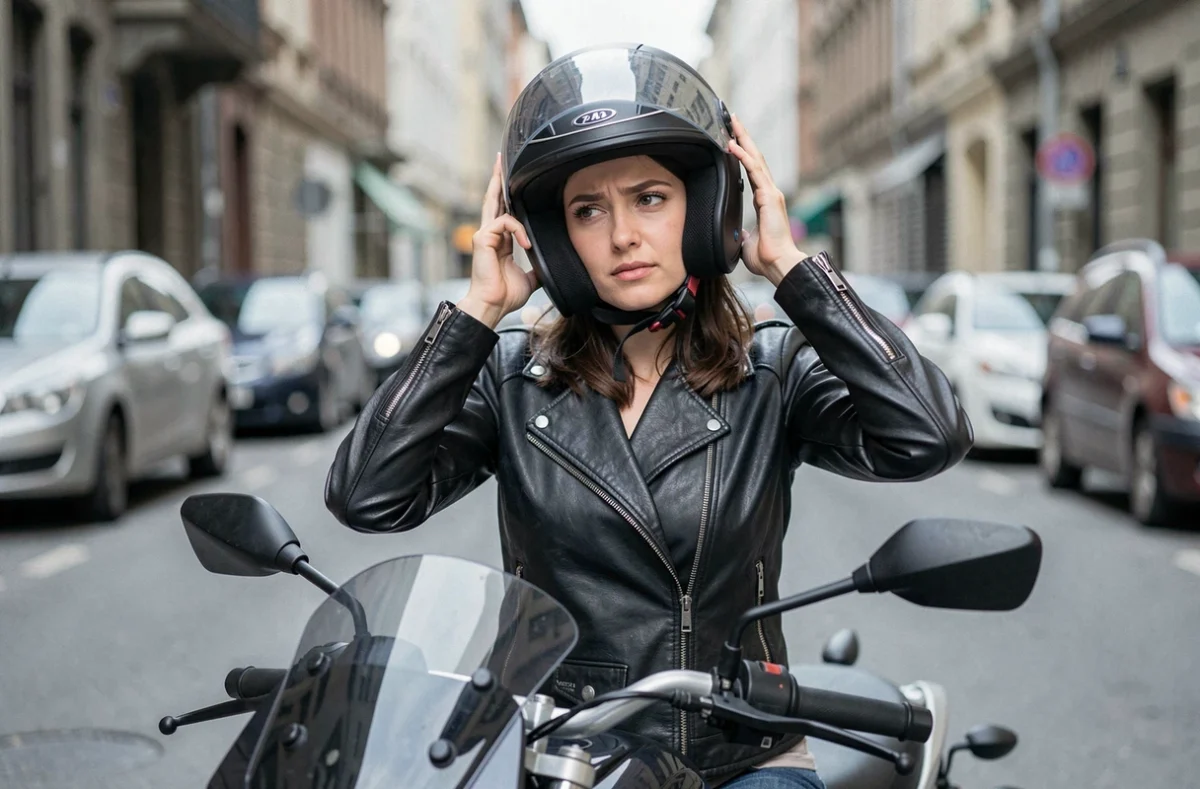
If you regularly carry passengers, investing in a second helmet specifically for them is the most reliable solution. An entry-level helmet approved to ECE 22-06 costs far less than a dermatologist’s appointment or replacing your own helmet early because it has worn out from repeated lending.
For occasional trips, some motorcyclists keep a mid-sized helmet (often an M or L) in a top case. It’s not ideal for a precise fit, but paired with a clean balaclava and a quick check that the helmet stays stable on the passenger’s head, it’s an acceptable compromise for a short urban ride.
Protecting a passenger involves more than just a helmet. In France, approved gloves are mandatory for both the rider and passenger. Ankle-covering footwear and abrasion-resistant trousers round out a sensible minimum set of gear, even though only helmets and gloves are strictly required by law.
A well-fitting, clean, approved helmet offers protection. The same helmet on someone whose head it doesn’t fit properly offers less protection. The best practice is to check the fit before lending it each time by asking the borrower to shake their head: if the helmet moves, it’s better to find another solution than to ride with a false sense of security.