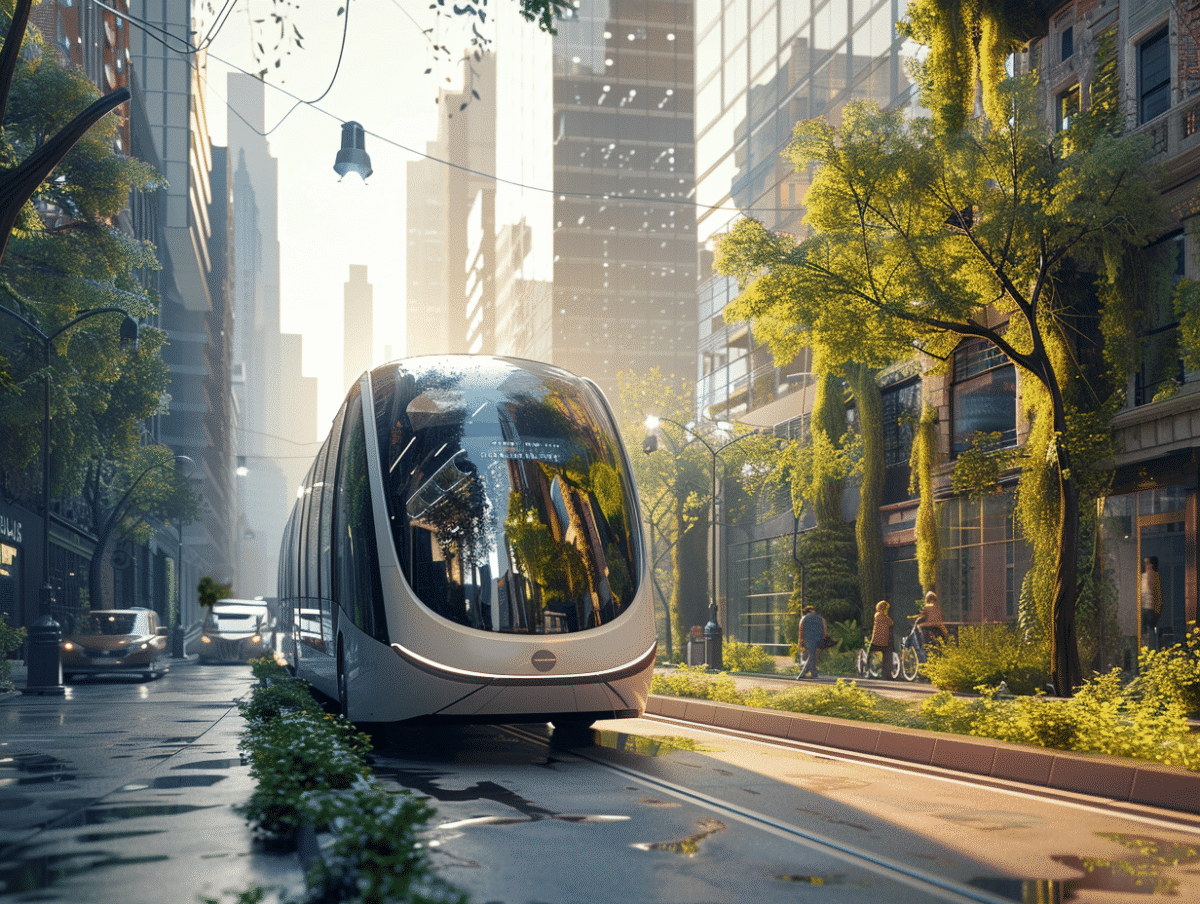
The rapid evolution of technology is significantly impacting the public transport sector. New advancements such as autonomous vehicles promise to revolutionize urban and intercity travel. The integration of contactless payment systems and mobile applications enhances the user experience, making journeys smoother and more personalized. Sustainable mobility initiatives, such as electric buses and bike-sharing programs, are multiplying to meet ecological imperatives. These major innovations are redefining the face of public transport, making it smarter, more efficient, and environmentally friendly.
Technological advancements revolutionizing public transport
Leveraging the latest breakthroughs in technology, the public transport sector is undergoing an unprecedented transformation. Autonomous vehicles, with considerable disruptive potential, are paving the way for a new paradigm of urban mobility. These vehicles, equipped with assisted driving systems and cameras providing a wide view, enhance the safety and efficiency of travel. Automation, extending beyond just driving, also affects logistics processes with innovative solutions like Keolis self-service, which reimagines access to public transport by making it more flexible and accessible.
In the field of urban transport, smart ticketing systems and applications provide users with real-time information on schedules and routes, thus optimizing their travel experience. Similarly, charging stations for electric vehicles are part of a sustainable development approach, facilitating the use of less polluting alternative transport modes. These devices fit into an ecosystem of sustainable mobility, where renewable energy sources play an increasing role in reducing greenhouse gas emissions.
Transport operators, aware of these challenges, are exploring innovative mobility solutions. The concept of Mobility as a Service (MaaS) is emerging, proposing an integration of different modes of transport, from trains to bike-sharing, into a unified offering. This holistic vision of smart mobility is revolutionizing the way we move around cities, responding to the demands for fluidity and flexibility in commuting. Electric mobility, combined with major innovations in public transport, thus outlines the contours of a sustainable urban mobility for the future.

The socio-economic and environmental impact of new mobilities
In an era where climate change demands a revision of our behaviors, technological solutions in public transport aim to be vectors of sustainable development. Biofuels, positioning themselves as a renewable alternative to fossil fuels, play a key role in reducing greenhouse gas emissions. The environment thus benefits from these innovations that promote sustainable urban mobility, less dependent on non-renewable resources.
The socio-economic repercussions of these advancements do not stop at the environmental sphere. Indeed, new forms of mobility generate jobs, stimulate innovation in the logistics sector, and offer growth opportunities for pioneering companies in these technologies. The adoption of electric vehicles and smart transport systems enhances the user experience, while fostering the emergence of greener and more efficient cities.
Simultaneously, the development of new mobilities influences urban planning and the quality of life in urban areas. The reduction of congestion, the decrease in noise and air pollution improve public health and the living conditions of city dwellers. Renewable energy sources, integrated into transport infrastructures, illustrate the commitment of communities towards a more sustainable society. These developments transcend the technological aspect to become genuine levers of social transformation.