
A thermal string trimmer is a gas-powered motorized tool, equipped with a two-stroke or four-stroke engine, that drives a line or a rotating blade to cut grass and vegetation in areas where a lawn mower cannot reach. The choice of a suitable model depends less on the brand than on three specific technical parameters: the engine displacement, the cutting system, and the regulatory context in which the device will be used.
Noise Regulation and Thermal String Trimmers in Residential Areas
Before even comparing models, one factor conditions the purchase: noise. The operating hours for a thermal string trimmer are not set by a single national law. It is the municipal or prefectural decrees that determine the allowed time slots, community by community.
A device may comply with the local time frame and still pose a legal issue. Article R. 1336-5 of the Public Health Code assesses nuisance by its duration, repetition, or intensity, not solely by the decibel level displayed on the technical sheet. A model with specifications that seem reasonable may therefore be considered excessive in a small adjoining garden.
Before investing, checking the current decree in one’s municipality remains the first step. To then compare the technical characteristics of the main models, the detailed sheets available on coupebordurethermique.fr allow for cross-referencing power, noise level, and cutting width.
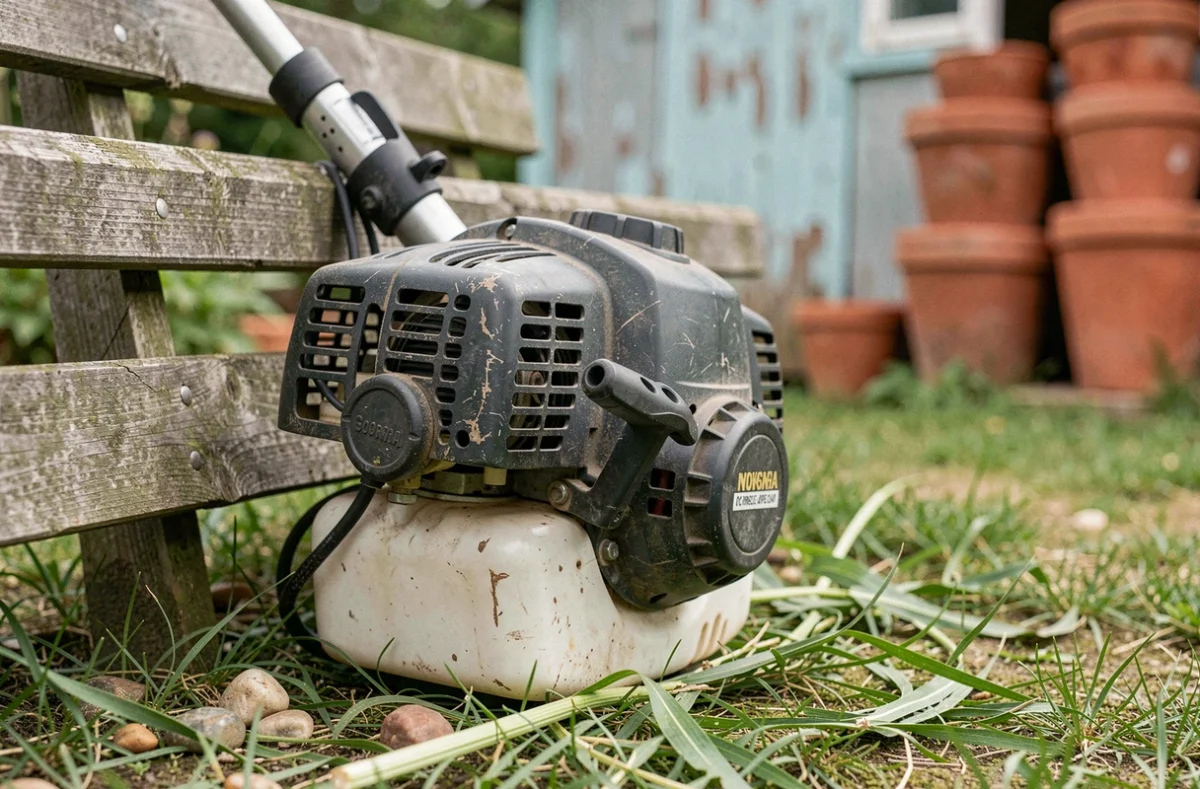
Engine Displacement and Type: What Determines Real Power
The power of a thermal string trimmer directly depends on its displacement, expressed in cubic centimeters. The larger the displacement, the more the device can drive a thick line or a blade through dense vegetation, but it also consumes more fuel and vibrates more.
Two-Stroke or Four-Stroke Engine
Two-stroke engines dominate the thermal string trimmer market. They are lighter and deliver high torque at high RPM, which is suitable for quick mowing. Their main drawback: they require a pre-mixed oil-gas mixture, and their gas emissions are higher.
Four-stroke engines, less common in this type of tool, run on gasoline without mixing. They are quieter and consume less, but they are heavier. For regular residential use on a medium-sized property, the four-stroke offers a better compromise between sound comfort and mechanical durability.
Cutting System: Nylon Line, Blade, or Mixed Head
The choice of cutting system radically changes what the device can handle.
- The nylon line is suitable for soft grass and finishing along paths or at the base of trees. Its diameter varies according to the engine power: a line that is too thin on a powerful engine breaks quickly, while a line that is too thick on a weak engine causes jolting.
- The three or four-tooth blade tackles brambles, brush, and tall grass. It transforms the string trimmer into a lightweight brush cutter but requires more caution and an appropriate harness.
- Some models accept an interchangeable mixed head, allowing for switching from line to blade depending on the task. This versatility comes at a cost, but it avoids the need to purchase two separate tools.
The line feed also deserves attention. Automatic feed systems (tap-and-go) are more convenient than manual loading spools, especially for extended sessions.
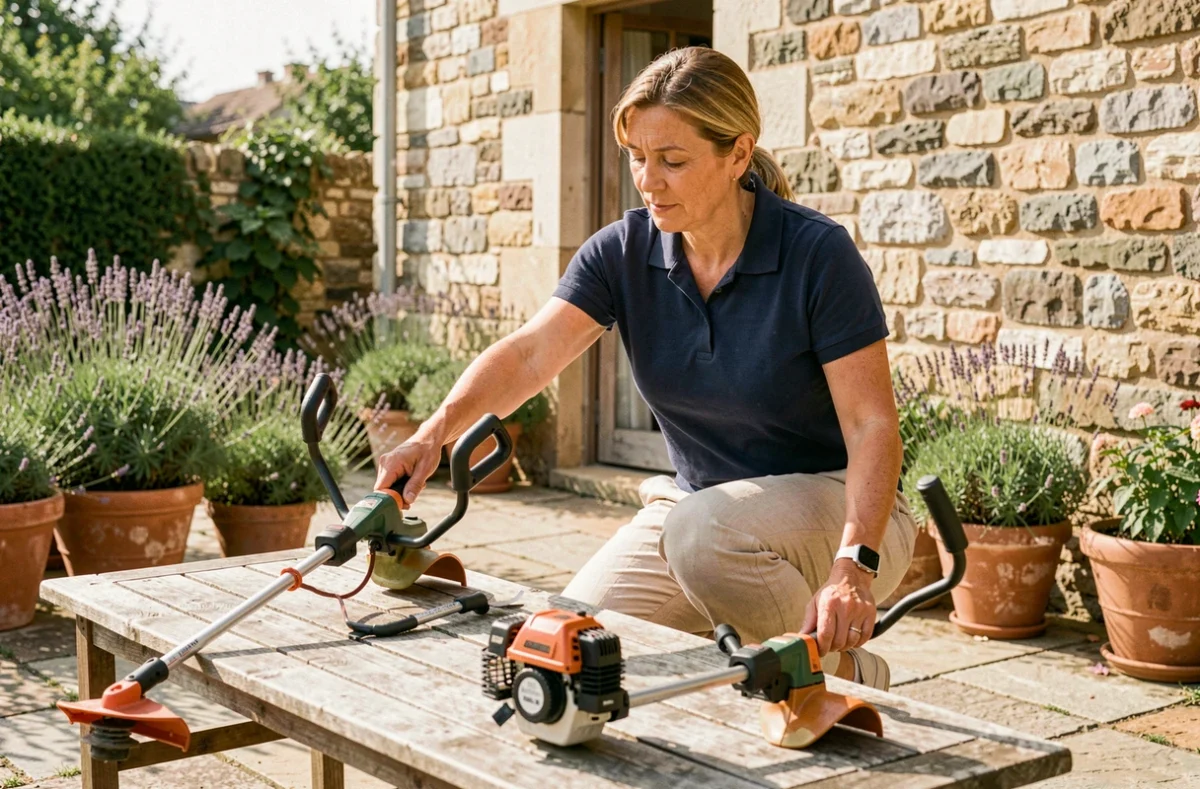
Ergonomics and Cutting Width: Adapting the Tool to the Terrain
The cutting width determines the strip of vegetation cut in a single pass. On a thermal string trimmer, it generally exceeds that of electric models, reducing the number of trips back and forth on long edges.
The weight of the device in use (full tank) directly influences fatigue. A heavy model without a shoulder harness can cause back pain after half an hour of use. Adjustable handles (loop or handlebar) also change comfort: a handlebar grip offers more lateral control for straight edges, while a loop handle facilitates movement in corners and around obstacles.
Protective Equipment Not to Be Overlooked
Debris projection represents the main risk with a thermal string trimmer. Protective equipment is particularly important: goggles or visor, cut-resistant pants, closed shoes, and hearing protection. A thermal engine generates sustained vibrations on the arms and hands, making anti-vibration gloves useful as soon as the session exceeds a few minutes.
Routine Maintenance of a Thermal String Trimmer
A thermal engine requires maintenance that electric or battery models do not. The air filter and spark plug are crucial for proper starting and engine longevity.
- Clean the air filter after each prolonged use to avoid clogging that reduces power.
- Replace the spark plug as soon as starting becomes difficult or the engine stalls frequently.
- Drain the fuel tank before prolonged storage (wintering), as the oil-gas mixture deteriorates and clogs the carburetor.
Neglecting these actions reduces the device’s lifespan and increases fuel consumption, which negates the economic advantage of thermal over the long term.
The choice of a thermal string trimmer hinges on the suitability between the displacement, the cutting system, and the constraints of the terrain. An overpowered model in a small adjoining city garden poses as many problems as an undersized model facing brambles. Checking local regulations before purchase remains the most cost-effective reflex, well before comparing technical sheets.