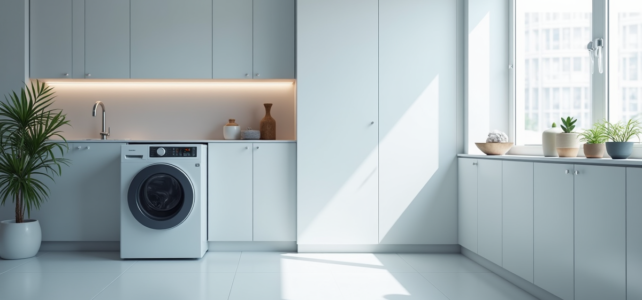
Buying a washing machine can be complex given the multitude of models available. Choosing the right appliance involves considering several essential technical criteria. The loading capacity is fundamental, especially for large families. It’s important to evaluate energy consumption, as it directly impacts the electricity bill. Additional features, such as specific washing programs or connectivity, can also make a difference.
The type of loading, front or top, influences ergonomics and space layout. The noise level is another element not to be overlooked, especially if the machine is installed near living areas. A good washing machine combines efficiency, economy, and user comfort.
The different types of washing machines
The market for washing machines offers an impressive diversity of models that meet the specific needs of consumers. The washing machine, an omnipresent household appliance in French homes, comes in several types.
Top-loading washing machine
Valued for its narrow width, the top-loading washing machine is popular among the French. Its top opening makes loading easier, especially in tight spaces.
Front-loading washing machine
The front-loading washing machine is the best-selling model in France. It offers a larger loading capacity and allows for the integration of a countertop above. Among its variants, we find:
- Slim washing machine: limited depth between 33 and 45 cm, ideal for small spaces.
- Compact washing machine: capacity under 5 kg, intended for singles or couples without children.
- Big size washing machine: capacity of 12 to 15 kg, perfect for large families.
Other types
The washer-dryer combines washing and drying, saving space. The built-in washing machine and the integrated washing machine fit into kitchen furniture, offering an aesthetic and functional solution. Mini washing machines cater to the needs for mobility and compactness.
The weight of a washing machine is another criterion influencing the choice. A heavy machine can pose transport and installation issues, but it is often more stable and less prone to vibrations.
These various options allow for meeting the diverse requirements of consumers, whether in terms of capacity, features, or placement in the home.
Essential technical criteria to consider
When purchasing a washing machine, several technical criteria must be scrutinized. Among them, electricity consumption and water consumption are paramount. These two elements directly influence your energy bill and ecological footprint. The energy label, now mandatory, evaluates appliances on these aspects and provides a clear indication of their efficiency.
Another fundamental point is the spin speed. Expressed in revolutions per minute (rpm), it impacts the drying time of the laundry. The higher it is, the drier the laundry will come out. Models offering speeds of up to 1600 rpm should be prioritized for optimal efficiency.
The noise level also deserves special attention. Modern washing machines have noise levels below 50 dB in washing mode and 70 dB in spinning mode. A quiet appliance is an asset, especially if you live in an apartment.
The washing efficiency and rinsing efficiency are determining criteria for achieving clean laundry without detergent residues. Tests conducted by consumer associations like Que Choisir allow for objective comparisons of these performances.
Also consider the ease of use. A digital display, automatic programs, and delayed start options simplify daily use. The loading capacity, often overlooked, should be suited to the size of your household. A machine with a capacity of 7 to 9 kg is generally suitable for families of four.
These criteria, when well analyzed, will guide you toward the choice that best meets your specific needs and ensure a sustainable and efficient investment.