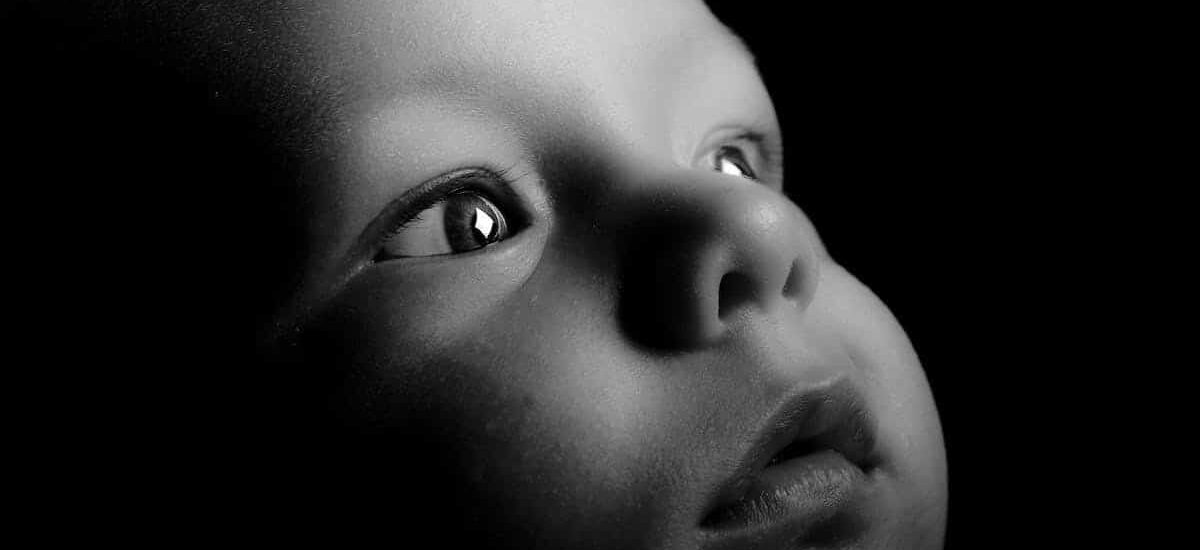
From the very first moments of life, newborns are confronted with a world filled with faces, sounds, and sensations. Amidst this abundance of information, a fundamental question arises: when do babies manage to recognize and identify their loved ones? This question, which has long intrigued researchers and parents, is at the heart of many studies conducted in psychology and neuroscience. Understanding the mechanisms and stages of facial recognition in infants would allow for a better understanding of their cognitive and emotional development and provide insight into the foundations of social bonding from birth.
Visual recognition in newborns
The development of visual recognition in newborns is a complex process that unfolds over several months. From the first weeks of life, the infant begins to explore their visual environment and differentiate certain objects, shapes, and colors. This is how they gradually learn to distinguish the outlines of human faces from other geometric shapes.
Many parents wonder ‘at what age does the baby see their parents’ specifically among other people. Indeed, according to a study conducted in 2003 by an American team led by Richard Davidson, it is only around two months that infants are capable of discerning their mother from the rest of the world.
This can be explained by the fact that facial recognition relies on complex mechanisms involving several brain regions and different types of sensory learning. During the first months of life, the baby must not only learn to identify the physical characteristics of faces (overall shape, specific features) but also gradually integrate this information into a broader social framework (family or social relationships).
This involves repeated exposure to the same familiar people (parents, siblings…): the more the baby sees their loved ones regularly and interacts with them through various sensory stimuli (touches, smiles…), the more likely they are to quickly develop their ability to specifically recognize them.
While understanding how a baby develops their facial recognition may seem anecdotal at first glance, it is actually crucial for their social and emotional development. By gradually learning to identify the faces of familiar people, the infant slowly builds the foundations of their future social relationships and gains a better understanding of their immediate environment. It takes two months for the baby to specifically recognize their parents among other individuals surrounding them.

Facial recognition abilities from birth
In addition to recognizing their loved ones, babies can also recognize unfamiliar faces from birth. Indeed, several studies have shown that infants are capable of distinguishing human faces from other geometric shapes from their very first day of life!
This can be explained by the fact that facial recognition relies on innate abilities that develop even before birth. Researchers have shown that as early as the third trimester of pregnancy, a fetus is capable of learning to differentiate specific sensory stimuli such as music or a voice regularly heard during this period.
This early process allows babies to begin identifying their mother based on the sound of her voice and other sensory cues (for example, the movements felt in the womb). This not only strengthens the emotional and social bonds between the mother and her child but has also been associated with a faster cognitive development in the child.
It is important to nuance these findings: while infants can indeed recognize certain physical aspects early in their lives, this does not mean they possess a universal innate ability to recognize all types of faces. There are certainly individual factors that can significantly influence this ability in each child.
Understanding how facial recognition develops in newborns is crucial for better grasping the mechanisms that allow them to interact with their environment in a more complex manner. And even though each child is unique, parents should be attentive to this fundamental stage of cognitive and emotional development, promoting regular exposure to familiar people and actively stimulating their visual curiosity.
Assist your baby during walks or take them to different places so they can explore various geometric shapes. The more they are exposed to a large number of people, the broader their abilities will expand early in life.
The mechanisms of face recognition in babies
Face recognition in newborns is a topic that has fascinated researchers for many years. Indeed, understanding how the cognitive and perceptual abilities of infants develop not only helps explain certain behaviors but also provides a better understanding of the underlying mechanisms.
Research has shown that facial recognition is the result of a complex set of psychological processes involving different regions of the brain. Among these are visual perception, selective attention, and long-term memory.
From their very first days of life, babies are able to identify their mother through the various sensory cues she emits. Newborns are particularly sensitive to the sound of her voice as well as her body odors. Their vision being still immature, they are not capable of recognizing all physical details such as facial features or eye color.
Over time and with repeated exposure to the same familiar people (such as their parents), babies gradually begin to learn to distinguish different physical aspects to identify these specific individuals among a crowd of other unknown people.
This process relies on what is called associative learning, where a particular stimulus is associated with a positive or negative emotional response. When the infant receives affectionate and consistent care from a given person (such as their mother), they associate these sensory stimuli with feelings of safety, well-being, and love.
Similarly, when the baby is exposed to a familiar person for a long period (for example, their father), they begin to recognize their physical characteristics such as their voice, scent, or specific movements they make. This process allows the infant to gradually build a mental schema that will later enable them to differentiate this person from other unknown individuals.
Face recognition in newborns relies on a complex set of sensory and cognitive mechanisms. Although some aspects are innate from birth (such as the ability to distinguish human forms), these skills develop throughout the first month of life through social and emotional interactions with the immediate family environment.
It is therefore crucial for parents to interact regularly with their child, particularly by promoting exposure to familiar faces as well as various sensory stimuli to help their baby fully develop their perceptual and cognitive abilities.
Recognizing faces: crucial for the baby’s emotional development
Face recognition is a key element of the social and emotional development of the baby. Indeed, it is a fundamental skill that allows the infant to forge emotional bonds with their close family environment.
Research has shown that babies are particularly sensitive to facial expressions from a very young age. For example, they are capable of distinguishing smiles from grimaces and react differently depending on the nature of the observed expression.
This ability to identify emotions on the faces of others is essential for the baby as it allows them to better understand the world around them as well as their own feelings and emotions. This recognition also facilitates communication between the infant and their parents or caregivers as it allows them to establish a non-verbal language based on facial expressions.
Beyond these important cognitive aspects, face recognition also has a crucial emotional dimension. Indeed, when the baby manages to recognize their mother or father through their specific physical characteristics (such as their voice or scent), it creates an indissoluble bond between them. This can translate into a deep sense of safety and love in the child, who then develops a privileged relationship with these familiar individuals.
Therefore, be sure to stimulate the senses in varied ways. This can include touches, smiles, or games of gaze and will allow the infant to fully develop their perceptual and emotional abilities.
Face recognition in newborns is a crucial element of the infant’s cognitive, social, and emotional development. By promoting this recognition through regular interaction with the immediate family environment, parents can help their child gradually build a coherent image of the world around them while strengthening the emotional bonds that unite them.